Introduction: Why Autonomous Bookkeeping Matters Now
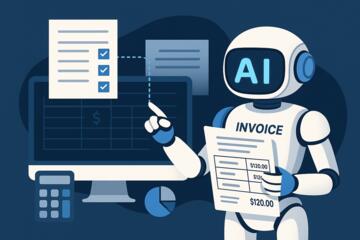
The rise of autonomous bookkeeping marks a turning point for modern finance teams. As accounting systems evolve into self-learning engines, CFOs must understand how automation affects accuracy, compliance, reporting, hiring, and long-term financial strategy. Autonomous bookkeeping uses artificial intelligence to categorize transactions, reconcile accounts, detect anomalies, and produce financial insights—all with minimal human intervention.
This shift is more than a technology upgrade. It transforms how CFOs lead their organizations, structure finance teams, and ensure data integrity in a world defined by speed and complexity.
What Is Autonomous Bookkeeping?
Autonomous bookkeeping refers to accounting systems that complete essential tasks automatically using AI and machine learning. These systems can:
-
Capture and categorize transactions
-
Create journal entries
-
Reconcile bank and credit accounts
-
Validate invoices and receipts
-
Flag unusual activity
-
Support month-end closing
-
Generate real-time dashboards
Tools like QuickBooks Advanced, Xero, Oracle NetSuite, and Ramp already use AI to automate large parts of the bookkeeping lifecycle. According to McKinsey, 50–60% of accounting tasks can be fully automated with current technology.
How Autonomous Accounting Systems Work
AI-Powered Data Capture
Machine-learning models interpret invoices, receipts, contracts, and statements. This includes OCR extraction and contextual reading of vendor names, SKUs, discounts, and tax lines.
Real-Time Categorization
AI classifies transactions into the correct GL codes. These models learn from:
-
Historical categorization patterns
-
Vendor-specific rules
-
Industry benchmarks
-
User corrections
Systems like Xero’s Auto Entry achieve classification accuracy above 95%.
Continuous Reconciliation
Autonomous bookkeeping reconciles bank feeds, payment platforms, and POS data in real time.
That means:
-
No more waiting for month-end
-
Fewer errors
-
Instant visibility into cash flow
Anomaly and Fraud Detection
AI identifies patterns that signal:
-
Duplicate payments
-
Suspicious vendor behavior
-
Unexpected GL entries
-
Revenue recognition issues
These features support compliance with SOX, IFRS, and GAAP standards.
Predictive Forecasting
Autonomous systems don’t just record data—they learn from it. They forecast:
-
Cash flow
-
Burning rates
-
Budget deviations
-
Upcoming liabilities
This helps CFOs make strategic decisions faster.
Why CFOs Should Care: Strategic Impacts of Autonomous Bookkeeping
1. Faster Reporting Cycles
Traditional month-end closing can take 7 to 14 days.
Autonomous bookkeeping reduces this to hours by avoiding batch-driven workflows.
2. Higher Accuracy Across All Records
Automated workflows eliminate many human-driven errors such as:
-
Double entries
-
Incorrect coding
-
Missed accruals
-
Manual typos
According to Deloitte, automation reduces accounting errors by up to 80%.
3. Reduced Operational Costs
Accounting automation lowers labor costs, contractor expenses, and rework overhead.
Companies often save 25–40% in AP/AR operations after adopting autonomous systems.
4. Better Real-Time Decision Making
CFOs gain live access to:
-
Revenue metrics
-
Cash positions
-
Expense patterns
-
Unit economics
-
Departmental performance
This enables data-driven decision-making instead of relying on delayed reports.
5. Scalable Global Finance Operations
Autonomous bookkeeping supports:
-
Multi-entity consolidation
-
Multi-currency reporting
-
Local tax rule compliance
-
Cross-border workflows
This is crucial for companies expanding across regions like Europe or APAC.
How Autonomous Bookkeeping Changes the Role of CFOs
From Accountant to Strategist
CFOs become:
-
Data strategists
-
Risk forecasters
-
Automation leaders
-
Business partners to the CEO
Instead of managing manual tasks, they guide automation strategy.
Smaller Teams, Higher Skills
Finance teams shift from data-entry roles to:
-
Financial analysis
-
FP&A
-
Risk management
-
Systems architecture
This requires new hiring strategies and retraining programs.
Focus on Controls and Governance
Autonomous systems still need governance.
CFOs must ensure:
-
Correct system rules
-
Clear audit trails
-
Access controls
-
Rich compliance documentation
More Collaboration With CIOs and CTOs
Finance becomes deeply integrated with IT.
CFOs must understand APIs, system integrations, workflow automation, and data infrastructure.
Actionable Steps for CFOs Preparing for Autonomous Bookkeeping
1. Start With a Process Audit
Map existing workflows:
-
AP and AR
-
Expense reports
-
Month-end close
-
Bank reconciliation
-
Vendor management
Identify repetitive tasks that automation can replace.
2. Choose the Right Technology Stack
Look for systems that offer:
-
Strong AI categorization
-
API integrations
-
Multi-entity capabilities
-
Embedded compliance
-
Real-time dashboards
Solutions like Oracle NetSuite, SAP S/4HANA, Ramp, and Airbase are popular among mid-market and enterprise finance teams.
3. Build a Data Governance Framework
Define:
-
Naming conventions
-
Access controls
-
Audit policies
-
Error-handling workflows
Autonomous bookkeeping requires clean, structured data.
4. Train Your Team
CFOs should invest in:
-
Financial automation courses on Coursera
-
Internal AI literacy sessions
-
Tool-specific certifications
A knowledgeable team ensures a smoother transition.
5. Monitor KPIs
Track:
-
Auto-categorization accuracy
-
Reconciliation time
-
Month-end close duration
-
Exception rate
-
Vendor payment cycle time
These metrics show whether automation is working.
Industry Examples of Autonomous Bookkeeping in Action
E-commerce
Platforms like Shopify generate thousands of transactions.
AI categorizes them instantly and reconciles payouts from Stripe, PayPal, and Amazon.
Hospitality
Chains like Hilton oversee multi-location budgets.
Autonomous systems standardize accounting across all hotels.
SaaS Companies
Subscription billing creates complex revenue schedules.
AI supports ASC 606 compliance and deferred revenue recognition.
Retail
AI helps retailers forecast inventory and match vendor invoices against purchase orders.
Common Mistakes Companies Make With Autonomous Bookkeeping
Mistake 1: Automating Without Cleaning the Data
Dirty data multiplies errors.
Fix vendor records, duplicates, and naming conventions first.
Mistake 2: Expecting 100% Autonomy Immediately
AI needs several cycles to learn categorizations and patterns.
Mistake 3: Ignoring Exceptions
Automation reduces workload, but exception management still requires structured oversight.
Mistake 4: Choosing Tools Without Scalability
A system designed for a startup won’t support a global enterprise.
Mistake 5: Lack of Change Management
Teams may resist automation due to fear of job loss.
CFOs must set expectations clearly and positively.
The Future of Autonomous Bookkeeping
Zero-Touch Accounting
Systems will fully automate:
-
Invoice creation
-
Payment scheduling
-
Accrual entries
-
Cash flow projections
Human involvement will be minimal.
AI-Driven Strategic Insights
Future systems will do more than automate—they will explain:
-
Which costs should be cut
-
Which products drive margins
-
Which departments overspend
Blockchain and Smart Contracts
Autonomous bookkeeping will integrate with blockchain to:
-
Validate transactions
-
Prevent fraud
-
Automate vendor payments
Predictive Compliance
AI will anticipate audit risks before they occur.
The CFO’s role will become even more strategic as automation handles the operational backbone.
Author’s Insight
During a recent engagement with a mid-sized SaaS company, I watched their finance team struggle with manual reconciliations, delayed reporting, and inconsistent coding rules. After implementing an autonomous bookkeeping system integrated with NetSuite, they reduced their month-end close from 10 days to 2 days. The CFO told me the most surprising benefit wasn’t speed—it was trust.
Real-time data allowed her to forecast revenue scenarios confidently and collaborate more effectively with the CEO.
The experience confirmed that autonomous bookkeeping doesn’t replace finance teams—it amplifies their strategic impact.
Conclusion
The rise of autonomous bookkeeping is reshaping how CFOs operate. By automating reconciliation, categorization, compliance, and reporting, AI-powered systems free finance leaders to focus on strategy, forecasting, and business growth. CFOs who embrace this shift will gain faster insights, more accurate data, and a scalable finance infrastructure.
Autonomous bookkeeping is not the future—it is the present, and CFOs must adapt quickly to lead confidently in this new landscape.