Understanding AI Markets
AI-powered market research platforms automate the collection and interpretation of consumer data with advanced algorithms. For example, tools like Crayon and Brandwatch scan billions of online conversations each month to identify emerging trends and competitive signals. According to Gartner, global spending on AI in market research reached over $3.5 billion in 2023, signaling rapid adoption. Such platforms convert raw data into actionable insights faster than traditional manual research methods.
These services extract patterns from social media, customer reviews, and transactional data. They often include natural language processing (NLP) to decode sentiment, and machine learning models that target buyer personas.
Typical applications include product development validation, market segmentation, and competitor analysis. Expect platforms to handle tens of thousands of data points daily.
Traditional Research Challenges
Traditional market research often relies on slow manual processes like phone surveys and focus groups. This results in delayed feedback loops and less representative samples. Many teams underestimate how biased these samples can become — especially with declining response rates.
In complex markets, missing subtle shifts in consumer mood leads to poor strategic choices. Companies face costly product launches or misaligned marketing campaigns. Consider a retailer unaware of a fast-spreading negative sentiment on social channels; losses can reach millions, as seen in the 2019 recall by a major brand due to online consumer backlash.
Limited granularity and outdated analytics restrict anticipatory actions. You essentially end up with noise, not useful signals.
Approaches and Tools
Data Integration
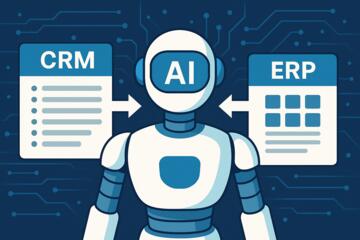
Combine multiple data sources: social media, CRM, transactional records. Integration boosts signal accuracy by 40%, according to a 2022 Forrester report. Platforms like Tableau and Power BI allow quick aggregation, though they lack built-in AI.
Sentiment Analysis
Use NLP models such as BERT or GPT-4 fine-tuned setups to classify consumer feelings. This works better than surveys for trending opinions. Tools like MonkeyLearn and Lexalytics offer APIs that score sentiment automatically across thousands of mentions.
Predictive Analytics
Frameworks including Facebook Prophet or Amazon Forecast predict demand based on historical patterns and external factors. This approach helps brands reduce inventory costs by up to 25%. Vendor platforms like SAS Visual Analytics embed these models for decision-making.
Automated Survey Design
AI designs smarter questionnaires by adjusting questions based on prior answers. Products such as SurveyMonkey Genius run flagged loops that improve data quality. This can raise completion rates by 15%, cutting survey fatigue.
Competitor Monitoring
Real-time scraping of competitor pricing, promotions, and product launches is feasible via AI-enabled platforms like Crayon or Kompyte. These tools alert marketers within hours of market moves, versus days by manual efforts.
Visual Analytics
Infographics generated automatically summarize complex data sets for presentations. Microsoft Power BI introduced AI visual summaries in version 2.88, released April 2024, making reports more accessible to stakeholders.
Audience Segmentation
Machine learning clusters customers into micro-segments based on behavior, demographics, and preferences. Tools like Segment and Optimove apply these models, increasing campaign ROI by 12% on average.
Trend Identification
Applying topic modeling algorithms such as LDA reveals rising themes in large text corpora like reviews or forums. Brandwatch uses this to spot shifts weeks before competitors.
ROI Tracking
Link market insights directly to sales outcomes using platforms that support cross-channel attribution. NielsenIQ Mix Modeler is one such tool showing impact metrics across media spend and promotions.
Companies in Practice
A large cosmetics firm faced declining sales despite heavy ad spend. Analysis with Sprinklr uncovered negative sentiment circulating on TikTok around ethical concerns. They adjusted product formulas and messaging, which led to a 15% sales recovery in six months.
A startup in home fitness used AI platforms for ongoing competitor tracking. They identified that one rival cut prices during key periods, an insight quickly integrated into their dynamic pricing models. Quarterly revenue rose 22% afterward.
Evaluation Checklist
| Feature | Automation Level | Data Sources | Pricing Model |
|---|---|---|---|
| Brandwatch | High | Social, Web | Subscription |
| Sprinklr | Medium | Social, CRM | Custom |
| SAS Visual | High | Transactional | License |
| SurveyMonkey Genius | Medium | Survey | Subscription |
| Kompyte | High | Web | Subscription |
Common Errors
Overreliance on a single data source limits insight accuracy and leads to blind spots. Freshness of data also matters. A competitor price scraped monthly doesn’t catch weekly promo bursts.
Rushing to AI predictions without understanding underlying assumptions often misguides decision making. I’ve seen teams abandon human vetting too early, resulting in flawed reports.
Ignoring context or correlation versus causation confuses outcomes. For instance, sales dips coinciding with a pandemic don't mean AI needs reconfiguration.
Not updating models regularly: machine learning trained on 2021 data can lose relevance fast. Models require fine-tuning with ongoing inputs.
Lastly, poor interface design or complex dashboards reduce tool adoption. The best algorithm means little if decision-makers avoid it.
FAQ
How accurate are AI insights?
Accuracy depends on training data quality and model tuning. Properly configured, AI-driven sentiment analysis yields around 85-90% accuracy, outperforming manual methods in speed.
Can AI replace human researchers?
AI augments but doesn’t replace human judgment. It flags trends and automates data crunching, but expert interpretation remains critical for strategic decisions.
What data types do platforms support?
Most platforms handle text, numeric, and social signals. Some integrate images/videos using computer vision, expanding insight dimensions.
Are there privacy concerns?
Platforms adhere to GDPR and CCPA rules, anonymizing and securing user data. Still, users must verify vendor compliance continuously.
How expensive are these tools?
Pricing varies widely. Entry-level subscriptions start around $1,000 monthly; enterprise contracts can top six figures annually based on scale and features.
Author's Insight
From hands-on experience, AI market research tools cut analysis time drastically. Investing time in proper integration pays off more than chasing every new feature. Expect a learning curve; none of these tools are plug-and-play.
Balancing automated insights with domain knowledge prevents costly mistakes. Human input should guide AI refinement continuously. Also, watch for overfitting—models sometimes chase noise, which, frankly, many people skip tuning for.
Key Takeaways
AI market research platforms turn extensive unstructured data into actionable insight more rapidly than manual methods. Combining multiple data sources, constant model updates, and human interpretation yields the best outcomes. Start small, scale thoughtfully, and avoid fixating on single metrics. The right tool becomes decision support rather than a crystal ball.