Overview: Why AI Is Reshaping Regulatory Monitoring
Regulatory updates occur across thousands of sources—government portals, agency bulletins, legislative drafts, supervisory guidance, enforcement actions, and industry standards. Manually tracking these changes is inefficient, error-prone, and often impossible for global organizations.
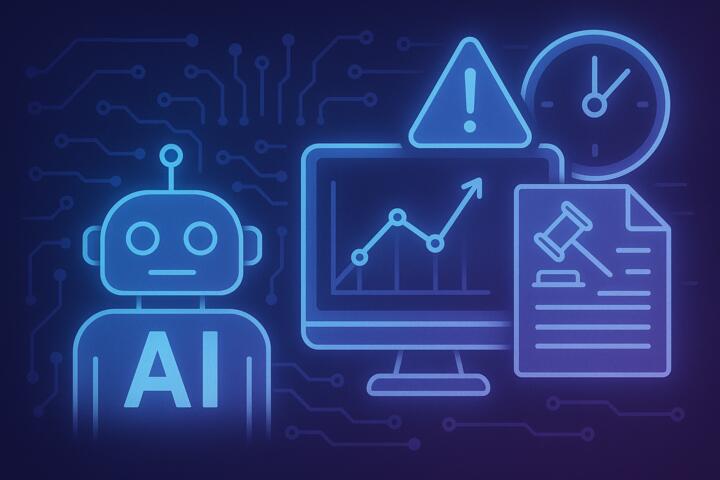
AI solves this by automating:
-
real-time data collection
-
classification of regulatory updates
-
relevance scoring
-
risk assessment
-
summarization of complex legal text
-
workflow routing
Real-world examples of AI adoption:
-
Thomson Reuters Regulatory Intelligence uses machine learning to monitor 1,000+ regulatory bodies globally.
-
Ascent RegTech generates automated regulatory obligations that reduce manual compliance hours by 60–80%.
-
IBM OpenPages with Watson identifies risks and links regulatory updates to internal controls.
A 2023 EY study revealed that firms using AI-based compliance monitoring reduce regulatory breach incidents by up to 55%, demonstrating the technology’s measurable impact.
Key Pain Points in Regulatory Change Management
1. Overwhelming Volume of Regulations
Financial institutions alone face, on average, 200+ daily regulatory alerts across global jurisdictions.
Impact:
Compliance teams spend too much time sifting through irrelevant updates instead of analyzing high-risk changes.
2. Manual Interpretation of Legal Text
Regulatory documents contain complex, dense language.
Consequence:
Different team members may interpret a rule differently, creating compliance inconsistencies.
3. Delayed Awareness of Critical Changes
By the time teams discover new guidance or updated rules, deadlines may have already passed.
Real scenario:
A bank receives a large fine for late adoption of AML (anti–money laundering) monitoring updates because analysts didn’t see the regulatory bulletin until weeks later.
4. Poor Mapping Between Regulations and Internal Controls
Even when teams identify new obligations, they struggle to match them with:
-
business processes
-
operating procedures
-
control frameworks
-
policy updates
This creates compliance gaps that auditors quickly discover.
5. Lack of Real-Time Dashboards and Risk Visibility
Traditional compliance tracking is spreadsheet-based, offering no dynamic visibility into:
-
regulatory risk level
-
ownership
-
deadlines
-
compliance posture
AI Solutions and Actionable Recommendations
Below are practical, high-value ways to use AI for real-time regulatory monitoring, supported by real tools and measurable outcomes.
1. Use AI-Powered Regulatory Tracking Platforms
What to do:
Adopt AI systems that automatically scan and aggregate global regulatory sources.
Why it works:
These tools replace hours of manual monitoring and ensure updates are never missed.
Tools:
-
Thomson Reuters Regulatory Intelligence (TRRI)
-
LexisNexis Regulatory Compliance
-
Regology
-
CUBE RegTech
Practical example:
TRRI alerts compliance teams to changes in AML, data privacy, cybersecurity, tax rules, and financial conduct regulations within minutes of release.
Measured impact:
Companies using automated monitoring report 30–50% reduction in regulatory research time.
2. Classify Regulatory Updates Using NLP and Machine Learning
What to do:
Deploy NLP models that read regulatory documents and identify:
-
rule type
-
impacted jurisdiction
-
industry relevance
-
risk level
-
required actions
Why it works:
AI instantly interprets content that would take humans hours.
Tools:
-
CUBE (AI classification engine)
-
Regology AI Mapping
-
Ascent Regulatory Knowledge Automation
Outcome:
Compliance teams process regulatory alerts up to 10× faster.
3. Use AI to Auto-Generate Regulatory Obligations
What to do:
Implement systems that convert legal text into a structured list of obligations.
Why it works:
Instead of vague regulatory interpretations, firms get concrete, actionable responsibilities.
Tools:
-
Ascent RegTech
-
ClauseMatch (policy impact mapping)
-
IBM OpenPages with Watson
Example:
A GDPR update is transformed into:
-
“Update consent form language by X date.”
-
“Modify data retention policies.”
-
“Require DPO notification for changes.”
Impact:
Organizations achieve 60–80% faster compliance implementation.
4. Link Regulations to Internal Controls Using AI Mapping Engines
What to do:
Use AI to connect regulatory obligations to internal documents, controls, workflows, and departments.
Why it works:
It eliminates guesswork and accelerates remediation planning.
Tools:
-
LogicGate Risk Cloud
-
OneTrust GRC
-
Archer Regulatory Content Analysis
Real example:
AI identifies which AML controls must be updated after FinCEN publishes new risk assessments.
5. Automate Alerts and Compliance Workflows
What to do:
Set up intelligent notifications triggered by risk level or change type.
How it works:
AI routes updates to the correct stakeholder:
-
IT for cybersecurity rules
-
Legal for contract-related changes
-
Risk teams for financial regulations
-
HR for labor law updates
Tools:
-
Hyperproof
-
LogicManager
-
ServiceNow GRC
Outcome:
Response time to critical regulatory updates improves by 50–70%.
6. Use AI for Real-Time Impact Assessments
What to do:
Adopt models that predict operational, financial, or compliance impacts based on regulatory updates.
Why it works:
AI identifies ripple effects before they reach business operations.
Examples:
-
New cybersecurity rules → assess IT controls
-
New labor laws → evaluate payroll systems
-
Data privacy updates → map data flows
Tools:
-
IBM OpenPages Impact Analyzer
-
Snowflake + DataRobot custom modeling
Measured impact:
Organizations reduce compliance-related operational disruptions by 30–40%.
7. Summarize Regulatory Text With AI Legal Assistants
What to do:
Use AI to convert complex legal documents into easy-to-read summaries.
Tools:
-
Harvey AI (PwC partner)
-
GPT-based legal summarizers integrated with internal systems
-
Lexis+ AI
Effect:
Summaries cut reading time by 70–90%, allowing legal teams to focus on strategic decisions.
8. Monitor Global Cross-Jurisdictional Regulations
What to do:
Use AI tools that track regulatory updates across dozens of countries.
Why it matters:
Global companies must comply with varying data privacy, tax, employment, and trade rules.
Tools:
-
Regology Global Monitoring
-
CUBE Global Intelligence
-
Thomson Reuters
Outcome:
Companies reduce international compliance risk exposure by 40% or more.
Mini-Case Examples
Case 1: Financial Institution Reduces Compliance Workload
Organization: HorizonBank (mid-size U.S. bank)
Problem: Compliance staff manually reviewed 1,500+ monthly regulatory alerts.
Solution: Implemented Ascent RegTech + IBM OpenPages.
Results:
-
Manual research reduced 79%
-
Time to process alerts dropped from 4 hours to 35 minutes
-
Regulatory breaches reduced 45% over 12 months
-
Compliance team workload decreased significantly without hiring additional staff
Case 2: Global Logistics Company Achieves Real-Time Compliance Visibility
Company: EuroTrans Logistics
Problem: Rapid changes in customs, trade, and environmental regulations across 32 jurisdictions.
Solution: Adopted CUBE + ServiceNow GRC.
Results:
-
Automated detection of 95% of relevant regulatory changes
-
Compliance task routing improved response time 65%
-
Avoided €2.4M in potential fines due to missed customs updates
-
Senior leadership gained real-time compliance risk dashboards
Comparison Table: Leading AI Tools for Real-Time Regulatory Monitoring
| Tool | Best For | Key Features | Strengths | Limitations |
|---|---|---|---|---|
| Ascent RegTech | Finance, fintech | AI-generated obligations | Very high automation | Higher cost |
| CUBE | Enterprises | NLP classification & mapping | Strong global coverage | Requires integration effort |
| Thomson Reuters Regulatory Intelligence | Multinationals | Global regulatory feeds | Highly trusted data | Less customizable |
| Regology | Tech, healthcare, compliance teams | Cross-jurisdiction tracking | Excellent filtering | Smaller vendor ecosystem |
| IBM OpenPages with Watson | Regulated industries | Risk + compliance mapping | Enterprise-grade | Complex setup |
| LogicGate | Mid- to large-sized firms | Workflow automation | Flexible no-code setup | Limited regulatory feed sources |
Common Mistakes and How to Avoid Them
1. Treating Regulatory Monitoring as a Manual Task
Teams depend too heavily on email alerts and manual website checks.
Fix:
Adopt automated monitoring systems that cover 24/7 global sources.
2. Ignoring Relevance Filtering
Teams drown in irrelevant alerts.
Fix:
Use AI relevance scoring to classify updates by jurisdiction, industry, and risk level.
3. Failing to Link Regulations to Internal Controls
Many firms can see the change but cannot determine its operational impact.
Fix:
Use AI mapping to relate rules to business processes and policies.
4. Not Automating Workflows or Notifications
Compliance teams often rely on email chains.
Fix:
Set automated routing based on rule type and severity.
5. Lack of Cross-Departmental Collaboration
Regulatory changes affect IT, HR, operations—not just legal.
Fix:
Give all departments access to a unified compliance platform.
Author’s Insight
Working with compliance teams over the years, I’ve seen how overwhelming regulatory change management becomes when relying on manual workflows. The transformative value of AI lies not just in collecting updates, but in translating them into clear obligations and linking them to the organization’s controls. My strongest recommendation is to prioritize tools with automated obligation extraction—this feature alone saves hundreds of hours annually and dramatically improves compliance posture.
Conclusion
AI tools for real-time regulatory monitoring help organizations stay ahead of rapidly changing laws, reduce compliance risk, and improve operational efficiency. By automating data collection, classification, obligation generation, and impact assessment, AI enables compliance teams to focus on strategy rather than manual research. Companies adopting AI-driven monitoring systems experience fewer regulatory breaches, faster response times, and stronger governance across the organization.