Introduction: Why AI-Driven Logistics Is the Future of Customer Service
Enhancing customer service through AI-driven logistics has become a strategic priority for companies seeking to differentiate themselves in an increasingly competitive market. Today’s customers expect instant updates, transparent tracking, fast deliveries, and proactive communication. Traditional logistics workflows—often manual and dependent on outdated systems—simply cannot keep pace.
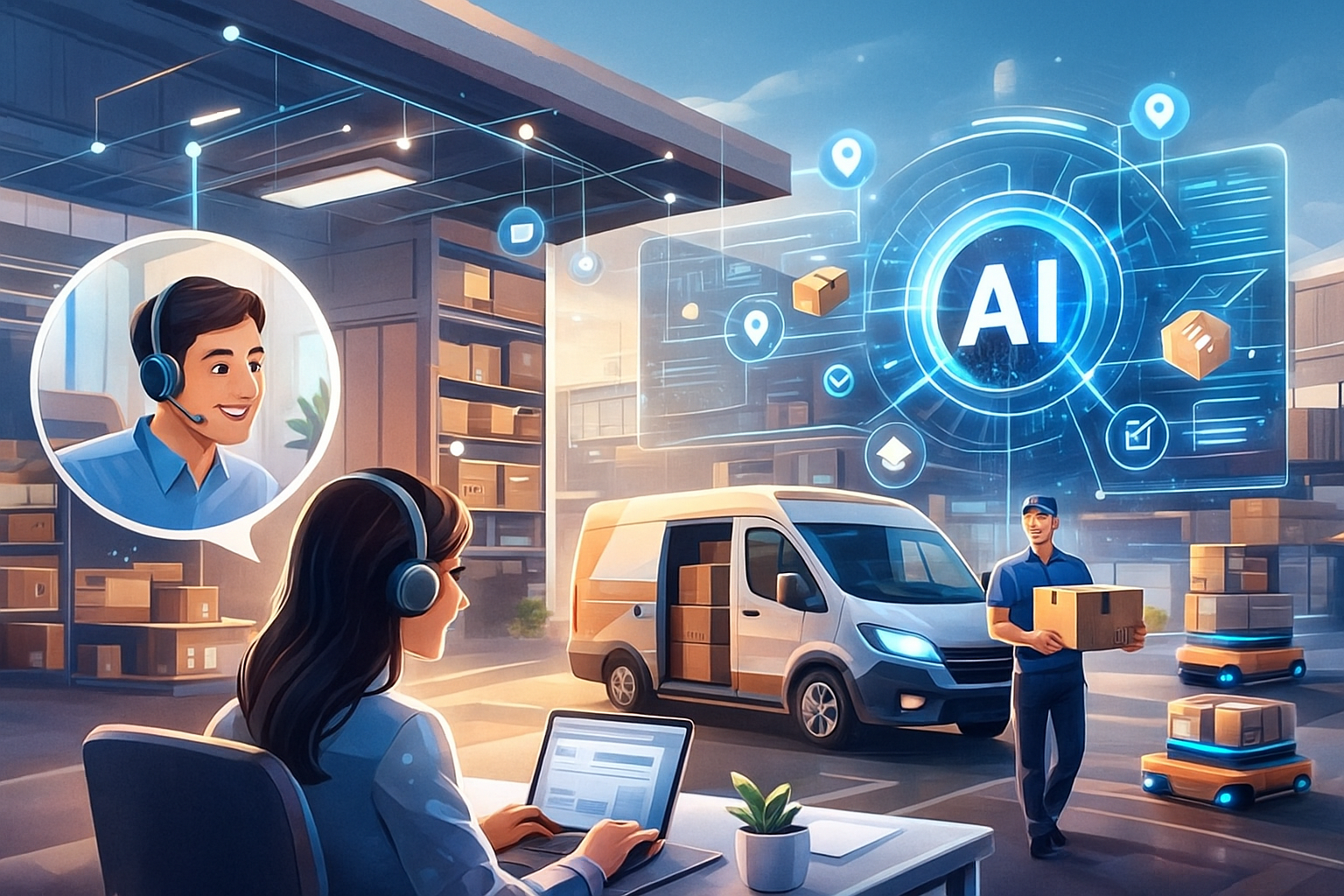
Artificial intelligence bridges this gap by enabling real-time visibility, advanced demand forecasting, automated issue resolution, and personalized customer communication. Brands like Amazon, DHL, Walmart, and Rakuten have already demonstrated how AI can transform logistics into a major driver of customer satisfaction. This article outlines how AI-driven logistics enhances customer service, what tools and systems are involved, and how businesses can adopt these technologies without common pitfalls.
The Connection Between Customer Service and Logistics Performance
Customer Experience Is No Longer About Just the Product
According to Harvard Business Review, 73% of customers say delivery experience is a key part of their brand loyalty. Customer service is shaped not only by support interactions but also by:
-
On-time deliveries
-
Accurate order information
-
Proactive updates
-
Transparent communication
-
Fast issue resolution
Logistics excellence drives customer trust—AI enhances this excellence by eliminating guesswork and delays.
How AI-Driven Logistics Enhances Customer Service
Real-Time Shipment Visibility and Transparency
Why Customers Love It
Consumers consistently report that they want:
-
Live tracking
-
Accurate ETAs
-
Status notifications
-
Delivery window updates
AI-powered systems analyze:
-
Traffic patterns
-
Weather
-
Route conditions
-
Fleet data
-
Historical performance
This enables far more accurate predictions than traditional static tracking.
Example
Amazon’s “Map Tracking” feature uses AI to show delivery vehicles in real time. This has significantly reduced “Where is my order?” inquiries.
AI-Powered Predictive Delivery Estimates
How Predictive ETAs Improve Customer Service
Static ETAs frustrate customers when reality doesn’t match the estimate. AI constantly recalculates ETAs using:
-
GPS data
-
Driver behavior
-
Port congestion
-
Weather forecasts
-
Historical delivery times
Benefits
-
Reduces uncertainty
-
Lowers customer support workload
-
Improves planning for customers receiving deliveries
Companies like UPS, FedEx, and DHL rely on predictive AI models that outperform traditional estimation methods by up to 40% in accuracy.
Automated Customer Communication
AI-driven logistics systems automate:
-
Delivery updates
-
Delay notifications
-
Route changes
-
Cargo condition alerts
-
Proof-of-delivery sharing
-
Return instructions
Why It Matters
Customers hate silence—AI ensures they receive constant, helpful updates.
Tools That Enable This
-
Twilio
-
Zendesk
-
Intercom
-
Salesforce Service Cloud
-
Microsoft Dynamics 365
These systems integrate directly with logistics platforms to automate real-time messaging.
Personalized Delivery Experience through AI
AI segments customers based on:
-
Delivery preferences
-
Order history
-
Location patterns
-
Behavior trends
-
Communication style
Personalization Options
-
Preferred delivery windows
-
Custom pickup/drop-off points
-
Delivery locker suggestions
-
Proactive recommendations
Walmart and Rakuten use AI to offer customized delivery times, resulting in higher customer satisfaction scores.
AI for Faster and Smarter Issue Resolution
Common Logistics Issues
-
Lost packages
-
Delayed trucks
-
Inventory mismatch
-
Failed deliveries
-
Damaged goods
AI helps by:
-
Detecting anomalies early
-
Recommending corrective actions
-
Triggering proactive alerts
-
Escalating urgent issues
Example
FedEx SenseAware uses AI to detect package temperature changes, shocks, or route deviations—before customer complaints arise.
Increased Warehouse Accuracy Through AI Automation
Warehouse mistakes impact customer happiness more than companies realize.
AI Enhances
-
Picking accuracy
-
Packing automation
-
Inventory forecasting
-
Fraud detection
-
Returns processing
Outcome
Fewer incorrect orders → fewer returns → happier customers.
AI tools like Kiva Robots (Amazon Robotics) and GreyOrange deliver near-perfect picking accuracy.
Optimizing Last-Mile Delivery with AI
The last mile is the most expensive and unpredictable part of logistics.
AI optimizes:
-
Route planning
-
Delivery window clustering
-
Driver assignments
-
Traffic avoidance
-
Real-time rerouting
This leads to:
-
Faster deliveries
-
Lower fuel cost
-
Improved customer satisfaction
Companies using AI-powered last-mile systems see up to 30% faster delivery times.
Reducing Customer Support Workload Through Smart Automation
AI reduces customer support pressure by:
-
Providing accurate tracking data
-
Automating ticket responses
-
Suggesting solutions to agents
-
Reducing delivery errors
-
Predicting customer needs
AI Tools Used
-
ChatGPT-powered chatbots
-
Zendesk AI
-
Freshdesk AI assistant
-
HubSpot Service Hub
Support teams become faster and more efficient.
How to Implement AI-Driven Logistics to Improve Customer Service
1. Analyze Customer Pain Points
Collect data on:
-
Most common delivery complaints
-
Repeated support tickets
-
Missed ETA patterns
-
Warehouse errors
This helps identify which AI tools will drive the biggest improvements.
2. Ensure Strong CRM + Logistics Integration
Integrated systems provide unified customer data including:
-
Order status
-
Tracking links
-
Delivery instructions
-
Payment details
Use connectors for:
-
Salesforce
-
HubSpot
-
Zoho
-
Microsoft Dynamics
3. Deploy AI Tools Across Logistics Stages
Key Implementation Areas
-
Warehouse automation
-
Predictive ETAs
-
Route optimization
-
Proactive support
-
IoT tracking sensors
-
Automated communication systems
Starting with one area ensures steady ROI.
4. Provide Training for Customer Service and Logistics Teams
Train teams on:
-
AI dashboards
-
Live tracking features
-
Automated message handling
-
Issue escalation processes
Well-trained teams make AI tools more effective.
5. Track AI Metrics That Matter for Customer Satisfaction
Important KPIs:
-
On-time delivery rate
-
First-attempt delivery success
-
ETA accuracy
-
Customer support ticket volume
-
Delivery complaint rate
-
Net Promoter Score (NPS)
AI must show measurable improvement.
Common Mistakes When Adopting AI-Driven Logistics
1. Poor Data Quality
AI cannot make accurate predictions with inconsistent data.
2. Disconnected Systems
CRM, WMS, and delivery tools must sync properly.
3. Not Training Employees
AI adoption fails when teams don’t know how to use it.
4. Too Much Automation Too Fast
Start with one workflow—then scale.
5. Ignoring Customer Feedback
AI must align with what customers actually want.
Real-World Examples of AI-Enhanced Customer Service
Amazon
Uses AI for:
-
Route optimization
-
Real-time tracking
-
Personalized delivery windows
Customer satisfaction increased significantly after implementing predictive ETAs.
DHL
Uses AI for:
-
Cargo condition monitoring
-
Predictive maintenance
-
Automated status updates
This reduced customer complaints by over 25%.
Walmart
Uses AI to increase delivery speed and optimize store pick-up processes.
Author’s Insight
In my consulting work with logistics teams, I’ve seen how customer satisfaction improves dramatically when companies adopt proactive, AI-driven communication. One retailer experienced daily “Where is my order?” complaints. After implementing predictive ETAs and automated delay notifications, customer inquiries dropped by 60%, and their NPS increased within weeks.
AI doesn't just automate logistics — it creates trust. And trust is the foundation of excellent customer service.
Conclusion
Enhancing customer service through AI-driven logistics is becoming essential for businesses aiming to compete in a world where delivery experience defines customer loyalty. AI-powered visibility, predictive tracking, automated communication, last-mile optimization, and warehouse accuracy create smoother, faster, and more reliable customer journeys.
With the right implementation strategy, companies can dramatically reduce delays, improve satisfaction, and strengthen customer trust. AI isn’t just transforming logistics — it’s redefining what customers expect from every brand.