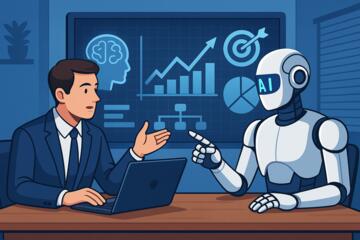
Learning AI's Role in Risk
Artificial intelligence redefines how companies handle risks in strategic planning. Risk mitigation involves predicting, evaluating, and managing potential setbacks. AI accelerates this by parsing complex data — far beyond traditional spreadsheets or gut instinct.
For instance, Morgan Stanley reported 30% reduction in risk assessment time after deploying AI-driven analytics in 2022. AI models scan historical trends, market signals, even geopolitical events to deliver forecasts and red flags.
Imagine a retail chain preparing for supply disruptions. An AI platform might analyze shipping logs, weather patterns, and vendor reliability scores, highlighting vulnerabilities early. The approach blends predictive insight with ongoing updates, unlike static risk matrices.
Key Challenges and Mistakes
Many organizations make the mistake of treating AI as a black box—expecting it to spit out perfect risk predictions without understanding its inputs or limitations. This overlooks the need for domain expertise and quality data.
Ignoring data hygiene undermines AI efficacy. If datasets are incomplete or biased, predictions degrade fast. One flawed input can cascade into poor decisions—costing millions or damaging reputation.
Another common flaw is underestimating the volume and variety of risks. AI models trained narrowly on financial data, for example, fail to capture supply chain or cybersecurity exposures. Risk management becomes fragmented, creating blind spots.
Effective AI Risk Strategies
Integrate Diverse Data Sets
Broader data varieties improve AI precision. Combining internal metrics with external feeds, like social media sentiment or commodity prices, offers fuller pictures. Tools like Databricks and Snowflake handle massive mixed data efficiently.
Continuous Model Updating
Risk landscapes shift rapidly; AI models must refresh regularly. Techniques like reinforcement learning adapt to new data—allowing the system to recalibrate risk scores. Practical AI platforms such as H2O.ai include these capabilities.
Human-in-the-Loop Checks
Pure automation rarely suffices. Expert review filters AI outputs, contextualizing unusual signals. Gartner's 2023 study states 67% of firms adopting human oversight saw risk detection accuracy rise substantially.
Scenario Simulation and Stress Testing
AI enables running thousands of ""what-if"" scenarios in seconds, which helps test resilience against shocks. Palantir Gotham software allows organizations to simulate impacts of varying economic or political factors.
Explainable AI Models
Understanding how AI reaches conclusions builds trust and aids compliance. Techniques like SHAP or LIME clarify feature influence on risk scores. This transparency answers stakeholder questions and satisfies regulators.
Deploy Real-Time Monitoring Systems
Real-time alerts detect emerging risk signals before materializing into crises. Solutions like Splunk or Elastic Stack ingest streaming data and flag anomalies immediately. Quick reaction matters.
Cross-Functional Collaboration
Risk mitigation demands collaboration between AI specialists, finance, legal, and operations teams. Workshops and shared dashboards, even simple Slack integrations, enhance decision-making. Silos kill risk intelligence.
Real-World Results
Consider a global insurer facing rising claims volatility in 2023. They integrated AI models analyzing weather data, claim history, and social unrest. This flagged at-risk regions proactively, resulting in a 15% drop in surprise payouts within six months.
Another example: a tech firm battling cybersecurity breaches used AI-driven behavioral analytics to identify attack patterns. After deploying these models, breach incidents dropped by 40% year-on-year, and incident response times improved sharply.
AI Risk Tool Comparison
| Tool | Use Case | Strength | Limitations |
|---|---|---|---|
| Palantir Gotham | Scenario Analysis | Fast simulations | Complex setup |
| H2O.ai | Predictive Modeling | Auto-ML tools | Black box risk |
| Splunk | Real-time Alerts | Instant detection | High cost |
| Databricks | Data Integration | Unified data lake | Steep learning curve |
Common Errors to Skip
Relying solely on AI without human context leads to misguided conclusions. AI tools miss nuance, like regulatory changes or unexpected cultural shifts.
Overfitting models to past data is another pitfall. When markets or environments change drastically—as during the 2020 pandemic—stale models fail catastrophically.
Failing to validate AI outputs through experiments or small pilots inflates false confidence. Testing with known risk cases avoids costly mistakes.
FAQ
How does AI predict risk?
AI uses algorithms to analyze historical and real-time data, extracting patterns linked to past risk events. This helps forecast potential future risks by identifying early warning signals in complex datasets.
Can small businesses afford AI risk tools?
Many cloud-based AI services offer scalable pricing. Smaller companies can start with simpler platforms like Microsoft Azure AI or AWS AI services and expand gradually without large upfront investments.
What data improves AI risk accuracy?
Combining internal financial, operational data with external sources such as market trends, news feeds, weather data, and social media creates richer input sets, making AI predictions more reliable.
Are AI models compliant with regulations?
Explainable AI and audit trails are key for compliance. Choosing platforms with transparent model outputs and documented decision processes helps meet regulatory standards.
How often should AI risk models update?
Updating frequency depends on industry volatility but monthly or quarterly refreshes are common. Real-time updates suit sectors like finance or cybersecurity where risks evolve quickly.
Author's Insight
From my time working with financial firms, I found AI predictions fail without quality data and expert input combined. AI does not replace judgment—it sharpens it. Expect hiccups at first; refining models takes cycles. Prioritize transparency, or users quit trusting outputs quickly. The right balance of automation and oversight boosts risk mitigation results.
Key Takeaways
Applying AI in risk mitigation demands attention to data diversity, model updating, and human oversight. Choosing tools that explain their logic and run realistic scenarios reduces blind spots. Avoid overreliance on AI alone—confirm findings experimentally. Strategic planning benefits from AI’s speed, but expert review remains the best defense against unpredictable risks.