The Future of Law: Can Legal Chatbots Really Replace Lawyers?
Artificial Intelligence is reshaping nearly every professional sector — and law is no exception. From drafting contracts to analyzing cases, legal chatbots are rapidly becoming essential tools for lawyers, firms, and even individual clients.

But one question looms large: will legal chatbots replace lawyers entirely?
The answer is nuanced. While AI can automate routine legal tasks, human judgment, empathy, and ethical reasoning remain irreplaceable. In other words, AI might transform legal practice — but it won’t erase the need for lawyers.
According to a PwC report, up to 30% of legal jobs could be automated by 2030. Yet, experts from Harvard Law School argue that AI will act more as a “copilot,” empowering lawyers rather than replacing them.
What Are Legal Chatbots?
Understanding the Basics
A legal chatbot is an AI-powered system designed to interact with users, answer legal questions, generate documents, and even assist with case research. These bots use Natural Language Processing (NLP) to understand legal queries and provide responses that mimic a lawyer’s advice — but within clear limitations.
Common Use Cases Include:
-
Drafting legal documents (NDAs, leases, contracts)
-
Guiding users through legal procedures (e.g., filing claims)
-
Analyzing case law or statutes
-
Scheduling consultations and managing client intake
-
Automating compliance checks
Examples of Legal Chatbots:
-
DoNotPay — branded as “the world’s first robot lawyer,” helping users fight parking tickets or request refunds.
-
LawDroid — used by firms to automate intake and client communication.
-
ROSS Intelligence — a now-discontinued AI legal research tool that leveraged IBM Watson’s NLP technology.
-
ChatGPT-based legal assistants — increasingly used by law firms for drafting and client Q&A.
How Legal Chatbots Work
Behind the scenes, legal chatbots combine machine learning (ML) and language models trained on thousands of legal documents, statutes, and precedents.
The Workflow Looks Like This:
-
User Input: The user types a question or request (e.g., “How do I file a small claims case?”).
-
NLP Processing: The chatbot interprets the intent and context.
-
Data Retrieval: It searches a legal knowledge base or database.
-
Response Generation: The bot crafts a clear, human-like reply.
-
Learning Loop: Feedback from users helps refine accuracy over time.
Example:
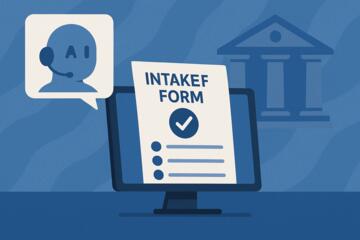
LawDroid uses this exact process to guide potential clients through intake forms, determining case types and urgency before assigning them to a human lawyer.
Advantages of Legal Chatbots
1. Accessibility and Affordability
Legal advice can be prohibitively expensive for many individuals. Chatbots like DoNotPay make basic legal assistance free or low-cost, improving access to justice for underserved communities.
2. Time Efficiency
AI can draft a standard contract in seconds — a task that might take a human lawyer an hour. This frees up lawyers to focus on complex, high-value work.
3. Error Reduction and Consistency
AI ensures every document follows the same format and avoids clerical errors. It’s particularly useful in compliance-heavy industries like finance or healthcare.
4. 24/7 Availability
Unlike traditional law offices, chatbots don’t need sleep. They provide instant responses anytime, anywhere — ideal for global clients or emergencies.
5. Scalability for Law Firms
Small and mid-sized firms can serve more clients without hiring additional staff. Chatbots can handle repetitive inquiries, document generation, and scheduling autonomously.
Limitations and Ethical Concerns
1. Lack of Human Judgment
AI can interpret laws but cannot apply ethical reasoning or emotional intelligence. Legal disputes often require empathy, discretion, and human understanding.
2. Risk of Inaccurate Advice
Even the most advanced AI can “hallucinate” — producing false or misleading information. This poses serious risks in legal contexts where accuracy is paramount.
Example:
In 2023, a U.S. attorney famously used ChatGPT for legal research — only to discover that the cited cases were entirely fabricated. The court sanctioned him for negligence.
3. Privacy and Data Security
Legal chatbots process sensitive data — contracts, personal information, and financial details. Without robust encryption and compliance with GDPR or HIPAA, they expose clients to data breaches.
4. Unauthorized Practice of Law (UPL)
In many jurisdictions, providing legal advice without a license is illegal. Chatbots must be carefully positioned as assistive tools, not substitutes for lawyers.
5. Bias and Fairness Issues
AI models trained on biased datasets can produce discriminatory outcomes — for example, underrepresenting minority groups or misinterpreting gendered language in contracts.
Will Legal Chatbots Replace Lawyers?
The short answer: no — but they will redefine the legal profession.
Here’s What AI Can Do Better Than Lawyers:
-
Automate administrative tasks (billing, scheduling, client intake)
-
Draft standard contracts and templates
-
Search large databases instantly
-
Generate reports and summaries
But What AI Still Can’t Do:
-
Offer emotional support and negotiation empathy
-
Represent clients in court
-
Interpret complex case law creatively
-
Apply ethical judgment in ambiguous situations
According to Stanford University’s CodeX Legal Tech Index, over 2,000 AI legal startups now operate worldwide — yet none claim to fully replace human lawyers. Instead, they enhance productivity, allowing lawyers to focus on strategic and advocacy roles.
How Lawyers Can Adapt to the AI Revolution
1. Embrace AI as a Partner, Not a Competitor
Lawyers who adopt AI tools for research, drafting, and client management gain a competitive edge. AI literacy is now as important as legal literacy.
2. Develop Hybrid Skills
Future lawyers should combine legal expertise with tech proficiency — understanding data privacy, AI ethics, and automation tools.
3. Prioritize Human-Centric Services
Focus on areas where empathy, negotiation, and creativity matter most — such as litigation, family law, or high-stakes advisory work.
4. Ensure Compliance and Transparency
When using AI tools, disclose their role to clients. Maintain oversight to prevent malpractice or misinformation.
5. Invest in Continuous Learning
Platforms like Coursera’s “AI and Law” (by Lund University) or Harvard’s Legal Tech courses offer up-to-date training for lawyers seeking digital fluency.
Real-World Examples of AI in Legal Practice
1. Deloitte Legal
Uses AI-powered contract analytics to process thousands of commercial agreements, cutting review times by 50%.
2. Clifford Chance (UK)
Deploys its AI tool “Kira Systems” for document review and due diligence during mergers.
3. Baker McKenzie
Implemented predictive analytics to estimate litigation outcomes — improving client forecasting accuracy by 25%.
4. DoNotPay
Has helped users recover over $160 million in refunds, fines, and claims since its launch.
5. LawDroid
Allows firms to deploy branded chatbots on their websites for lead generation and case triage.
Author’s Insight
During my work with a boutique law firm adopting AI automation tools, I witnessed a clear transformation. Tasks like drafting NDAs or reviewing contracts that once took hours now took minutes with AI assistance.
But what struck me most was how lawyers felt empowered, not replaced. The freed-up time allowed them to strengthen client relationships, handle negotiations, and focus on strategy — areas where machines still fall short.
My advice: AI is a tool, not a threat. The best lawyers of tomorrow will be those who can wield technology responsibly to deliver faster, fairer, and more accessible legal services.
Conclusion
Legal chatbots are transforming the legal industry — improving efficiency, accessibility, and affordability. However, they are not a substitute for human expertise. Instead, they serve as powerful assistants, automating routine work and empowering lawyers to focus on strategy and client care.
The future of law will not be AI vs. lawyers, but AI and lawyers working together to deliver smarter, faster, and more equitable justice systems.
In the end, the smartest move for legal professionals is not to resist change, but to lead it.