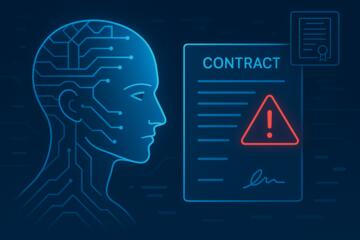
Introduction: Why AI Is Reshaping the Legal Profession
The future of the legal profession in the age of AI is shifting faster than most attorneys expected. Artificial intelligence—once limited to research tools—is now embedded in contract analysis, litigation, compliance, due diligence, and even client communications. According to a 2024 Thomson Reuters survey, 82% of legal professionals expect AI to significantly alter their work by 2030, and 52% already use generative AI in some form.

Law firms, corporations, and government legal departments are now asking the same question: What will the lawyer of the future look like?
This article explores how AI is transforming legal work, which roles are evolving, what skills lawyers must develop, and how to adapt in a world where automation accelerates every part of the profession.
How AI Is Changing the Core of Legal Work
AI Is Automating Repetitive Legal Tasks
AI excels at tasks that are:
-
repetitive
-
text-heavy
-
rule-based
-
data-driven
This includes:
-
legal research
-
contract drafting
-
summarizing deposition transcripts
-
extracting clauses
-
reviewing documents for due diligence
-
checking compliance
-
generating client updates
Companies like Harvey AI, Casetext CoCounsel, and Lexis+ AI are already embedded into workflows in major firms, including Latham & Watkins and Allen & Overy.
Why this matters
AI doesn’t replace legal judgment—it removes the mechanical layers around it.
AI Improves Accuracy and Reduces Human Error
Legal errors often come from:
-
fatigue
-
time pressure
-
manual proofreading
-
missed clauses
AI reduces these risks by scanning documents for:
-
inconsistencies
-
missing definitions
-
misaligned clauses
-
outdated language
-
compliance risks
Large firms report 30–60% reductions in drafting errors after integrating AI-based review systems.
AI Enables Predictive and Data-Driven Lawyering
Artificial intelligence can analyze:
-
case outcomes
-
judge tendencies
-
historical verdicts
-
opposing counsel behavior
-
financial risk indicators
These insights power predictive analytics used by:
-
litigation teams
-
corporate compliance units
-
M&A specialists
-
financial regulators
For example, Premonition, a litigation analytics platform, claims its AI can identify which lawyers win before which judges with surprising accuracy.
Which Legal Roles Will Change the Most?
1. Junior Associates
What’s changing
AI already drafts:
-
memos
-
research summaries
-
clauses
-
due-diligence reports
This reduces the need for junior-level manual work.
New expectations
Junior lawyers must now:
-
prompt effectively
-
verify AI output
-
manage AI-assisted workflows
-
understand legal tech tools
-
add strategy and reasoning
The value shifts from “doing the work” to “ensuring the work is correct.”
2. Paralegals and Legal Assistants
AI automates:
-
e-discovery
-
document categorization
-
scheduling
-
correspondence drafting
But paralegals who learn AI tools will remain essential as workflow coordinators.
3. In-House Counsel
In-house teams are moving faster toward AI than law firms. Corporations like Hilton, Salesforce, and Rakuten already use automated compliance systems to monitor regulatory change.
AI enables in-house counsel to:
-
automate contract lifecycle management
-
generate internal reports
-
streamline risk assessments
-
centralize legal knowledgebases
Companies increasingly expect lawyers to be tech-literate.
4. Compliance Officers
AI is becoming foundational in:
-
AML/KYC monitoring
-
privacy compliance (GDPR, CCPA)
-
reporting obligations
-
policy updates
Tools like DLA Piper’s Aiscension are already automating antitrust compliance review using AI that scans millions of documents for red-flag indicators.
Skills Lawyers Need to Thrive in the AI Era
1. Legal Prompt Engineering
Lawyers must learn how to:
-
give structured instructions
-
define tone and scope
-
request citations separately
-
constrain jurisdiction
-
provide examples and templates
Prompting becomes a legal drafting skill.
2. Data Literacy
Future legal professionals need to understand:
-
datasets
-
metadata
-
privacy rules
-
model limitations
-
risk of bias
This is now taught in programs at Harvard Law and Stanford.
3. AI Governance Knowledge
Law firms increasingly need experts in:
-
model evaluation
-
data retention
-
confidentiality rules
-
algorithmic transparency
-
regulatory compliance
This is especially relevant as the EU AI Act and U.S. state AI laws roll out.
4. Strategic Thinking and Human Interpretation
AI can summarize, generate, and analyze—but it cannot:
-
negotiate
-
reason ethically
-
weigh complex competing interests
-
manage client emotions
Human strategy will always differentiate great lawyers from automated systems.
Opportunities AI Creates for the Legal Profession
1. Expanded Access to Justice
AI can help:
-
automate simple legal forms
-
explain rights in plain English
-
guide users through small claims processes
-
provide first-step legal information
Courts in Utah and California already experiment with AI-assisted self-help systems.
2. Faster and More Efficient Legal Workflows
Law firms using AI report:
-
40–70% faster contract review
-
30% lower document processing costs
-
higher accuracy
-
shorter turnaround times
This makes legal services more competitive.
3. New Legal Specializations
Emerging fields include:
-
AI regulation law
-
data governance
-
digital ethics
-
algorithmic accountability
-
international AI compliance
These areas will grow over the next decade.
4. Better Work-Life Balance
By offloading mechanical tasks, lawyers can reduce burnout—a major issue in the profession. According to the International Bar Association, 62% of lawyers report chronic stress. AI may help shift high-stress workloads toward manageable, supervised automation.
Risks and Challenges for Lawyers in the AI Era
1. Hallucinations and Inaccuracies
Even advanced AI can:
-
fabricate cases
-
misinterpret statutes
-
misquote jurisdiction rules
-
produce outdated information
This is why human review remains mandatory.
2. Confidentiality and Data Security
Lawyers must:
-
avoid consumer AI tools
-
use enterprise versions
-
follow client privacy agreements
-
disable data retention
Violations could break attorney–client privilege.
3. Ethical and Regulatory Requirements
Bar associations emphasize:
-
duty of competence
-
duty of confidentiality
-
duty to supervise AI
-
requirement to verify citations
AI cannot be delegated unchecked.
4. Risk of Over-Reliance
AI should assist, not replace:
-
reasoning
-
interpretation
-
advocacy
-
ethical judgment
Lawyers must remain the decision-makers.
How Law Firms Should Prepare Today
1. Adopt Secure, Enterprise-Grade AI Tools
Options include:
-
OpenAI Enterprise
-
Harvey AI
-
Microsoft Copilot with Azure isolation
-
Anthropic Claude for Business
Confidentiality must come first.
2. Create Internal AI Policies
Policies should define:
-
approved AI tools
-
prohibited usage
-
verification requirements
-
client disclosure rules
-
data retention practices
-
billing guidelines
Many firms now have “AI use committees.”
3. Train Lawyers in AI Literacy
Offer regular internal training:
-
how to prompt
-
how to verify output
-
how to manage AI workflows
Firms like Clifford Chance and Baker McKenzie already run AI bootcamps for staff.
4. Build Hybrid Human–AI Workflows
Lawyers should:
-
draft a prompt
-
review the AI’s first draft
-
refine with specific instructions
-
perform final validation
This approach maximizes efficiency and minimizes risk.
Author’s Insight
Working with legal teams over the past few years, I’ve seen that AI adoption succeeds when firms combine enthusiasm with discipline. The lawyers who thrive are the ones who treat AI like a capable assistant—not a replacement. They question its output, refine prompts, and maintain strict ethical judgment. The most forward-thinking legal teams aren’t afraid of AI; they embrace it as a competitive advantage and use it to elevate—not diminish—their professional value.
Conclusion
The future of the legal profession in the age of AI is not about replacement—it’s about reinvention. AI will automate the mechanical parts of legal work, but human lawyers will remain essential for strategy, ethics, advocacy, and complex decision-making. Firms and attorneys who embrace AI responsibly will gain a competitive edge. Those who resist will find themselves lagging behind in an industry being reshaped at extraordinary speed.