The Evolution of Market Intelligence through Automation
Market analysis has shifted from a static, quarterly task to a dynamic, continuous stream of data. In the past, "competitive research" meant manually visiting a competitor's pricing page or signing up for their newsletter. Today, the sheer volume of digital footprints—social media mentions, GitHub commits, job postings, and ad spend—makes manual tracking impossible.
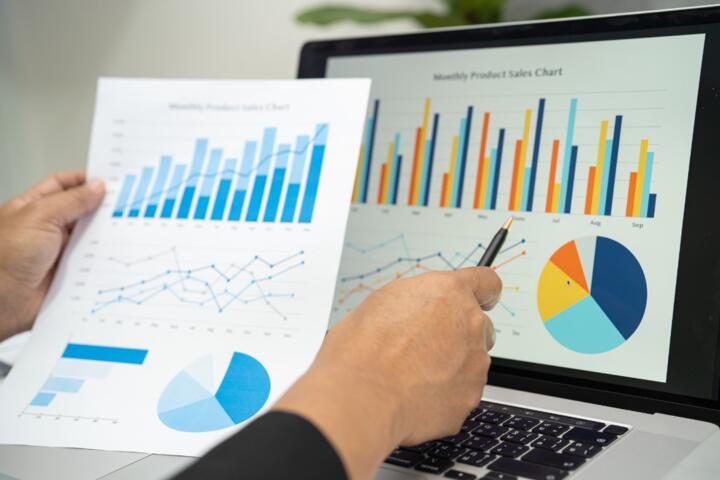
Automation tools now act as digital sentinels. For instance, an e-commerce brand can use scrapers to monitor thousands of SKUs across Amazon and Shopify, triggering price adjustments the moment a rival launches a sale. According to industry reports, companies that leverage real-time competitive data are 2.5 times more likely to outperform their peers in market share growth. This isn't just about "watching" others; it is about predicting their next move based on historical data patterns.
The High Cost of Outdated Research Methods
Many marketing teams still rely on "gut feeling" or sporadic manual audits, which leads to significant blind spots. A common mistake is focusing solely on direct competitors while ignoring "adjacent" threats—companies that solve the same problem with a different technology.
Failing to automate this process results in "Data Decay." By the time a manual report is finished, the pricing has changed, the ad campaign has ended, and the insight is obsolete. For a SaaS company, missing a competitor’s feature launch can result in a 15% increase in churn within a single quarter because the sales team isn't prepared to handle new objections. Real-world fallout often includes overspending on keywords that rivals have already dominated or launching products into saturated niches that looked "open" three months ago.
Strategic Frameworks for Automated Intelligence
Tracking Digital Footprints and Ad Intelligence
Understanding where your competitors spend their money is the fastest way to validate a marketing channel. Instead of guessing, use tools like Semrush or SpyFu to export a complete history of their PPC (Pay-Per-Click) keywords.
Why it works: You can identify "money keywords" that rivals have bid on for years. If they are still paying for that traffic after 24 months, it’s a proven conversion path.
On the ground: Set up alerts in AdSpy or Facebook Ad Library to get notified when a competitor launches a new creative. This allows your design team to counter-position your brand within 48 hours.
Visual and Functional Monitoring
Websites are living documents. A change in a "Sign Up" button color or a subtle shift in headline copy usually indicates a successful A/B test.
Tools like Visualping or Hexowatch allow you to monitor specific HTML elements on a competitor's site. If a rival removes a specific tier from their pricing page, it’s a signal that the tier wasn't profitable or they are moving up-market. Businesses using these triggers report a 20% faster response time to market shifts.
Sentiment Analysis and Social Listening
What customers say about your competitors is more important than what competitors say about themselves. Use Brandwatch or Talkwalker to run AI-driven sentiment analysis on mentions of rival brands.
If a competitor’s latest software update is receiving a 70% negative sentiment score on Reddit or X, your sales team should immediately reach out to those disgruntled users with a "switch and save" offer. This is proactive poaching enabled by real-time linguistic processing.
Product Development and Feature Parity
For technical products, monitoring "technographics" is vital. Services like BuiltWith reveal exactly which pixels, hosting services, and plugins your rivals use. If every major player in your niche just integrated a specific AI chatbot, you know exactly what the new baseline expectation is for your customers.
Mini-Case Examples: Automation in Action
Case 1: The Fintech Pivot
A mid-sized credit card startup noticed their customer acquisition cost (CAC) spiking. By using Similarweb to analyze traffic sources, they discovered a new neo-bank was capturing 40% of their referral traffic from a specific comparison site.
Action: They automated a "Share of Voice" report and shifted their budget to under-served YouTube influencers that the rival hadn't touched yet.
Result: CAC dropped by 22% within 60 days, and they reclaimed 12% of the lost traffic share.
Case 2: E-commerce Pricing Optimization
A boutique electronics retailer was losing sales to big-box stores. They implemented Prisync to track competitor prices every 3 hours.
Action: They set "Dynamic Pricing" rules to always stay $1 below the average market price, provided their margin didn't dip below 15%.
Result: Sales volume increased by 35% during the holiday season without manual price adjustments.
Checklist for Implementing an Automated Research Stack
| Step | Action Item | Recommended Tools |
| 1 | Identify Top 5 Rivals | Crunchbase, LinkedIn |
| 2 | Set Up Web Monitors | Visualping, Hexowatch |
| 3 | Monitor SEO/PPC Shifts | Ahrefs, Semrush |
| 4 | Analyze Customer Pain | G2, Capterra, Reddit |
| 5 | Track Financial/Hiring | Owler, LinkedIn Talent |
| 6 | Centralize Intelligence | Notion, Slack, Crayon |
Common Pitfalls and How to Avoid Them
The biggest mistake is Information Overload. Setting up too many alerts results in "noise" that the team eventually ignores. To avoid this, filter your alerts. Instead of tracking every blog post, track only "Pricing," "Team," and "Product" pages.
Another error is Ignoring Indirect Competitors. A company might not sell the same software, but they might be competing for the same slice of the customer's budget. Use AI-driven market maps to find these outliers. Lastly, never ignore the "Why." Data tells you what changed; you still need a human expert to interpret why it matters for your specific strategy.
FAQ
How often should I run automated market reports?
While data collection should be 24/7, deep-dive synthesis should happen monthly. Tactical alerts (like price changes) should be sent to Slack instantly.
Are these tools compliant with privacy laws?
Most reputable tools like Semrush or Brandwatch use public data and are fully GDPR/CCPA compliant. Avoid "black hat" scrapers that bypass login walls or violate Terms of Service.
Can I do this on a zero budget?
Yes. You can use Google Alerts, the Facebook Ad Library (free), and manual "Incognito" searches. However, you will trade time for money and lose the benefit of historical trend analysis.
Does AI replace the need for a Market Analyst?
No. AI handles the "heavy lifting" of data gathering and pattern recognition. The analyst is needed to turn those patterns into a creative business strategy.
Which tool is best for B2B competitive intelligence?
For B2B, Crayon or Klue are industry leaders because they focus on "Battle Cards" that help sales teams win deals against specific rivals in real-time.
Author's Insight
In my experience, the most underrated data point is a competitor's job board. If a rival suddenly hires six DevOps engineers and a Head of Expansion in Germany, you don't need a leaked memo to know they are scaling their infrastructure and entering the DACH market. Automation allows you to connect these dots before they even issue a press release. My advice is to start small: pick one competitor and one metric (like their SEO keywords) and master that before building a complex "war room" dashboard. The goal is to be informed, not overwhelmed.
Conclusion
Implementing automated systems for market analysis is no longer an optional luxury for high-growth firms. By utilizing specialized software to track pricing, ad spend, and customer sentiment, businesses move from a reactive stance to a proactive one. The key is to select a focused stack of tools that integrate directly into your existing workflow, ensuring that insights lead to immediate action. Start by automating your most time-consuming research task today to reclaim the hours needed for high-level creative strategy.