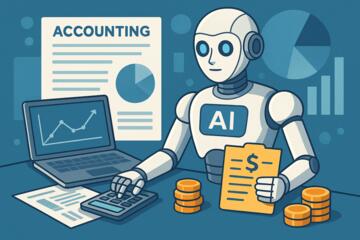
Introduction: Why Chatbots Are Changing Accounting Departments in 2025
The rapid evolution of artificial intelligence has transformed many business functions — but few areas are seeing as dramatic a shift as accounting. Today, chatbots are changing accounting departments by streamlining repetitive tasks, improving financial accuracy, strengthening compliance, and allowing accountants to focus on strategic decision-making instead of manual processing.
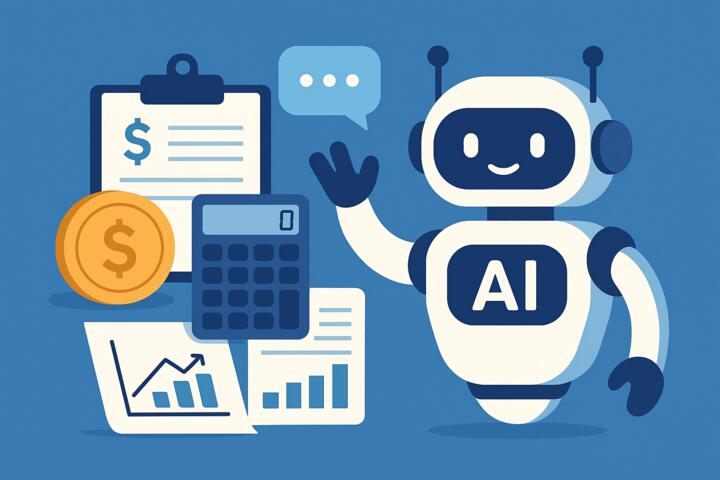
From answering internal finance queries to generating reports, reconciling accounts, processing invoices, and helping with audits, chatbots now serve as intelligent assistants inside modern finance ecosystems.
According to a 2024 Deloitte survey, 62% of finance leaders plan to increase chatbot and automation investments, and early adopters report up to 40% reduction in manual workload. Meanwhile, universities like Harvard and industry leaders such as Coursera are integrating chatbot-based finance simulations into their business programs.
This comprehensive guide explores how accounting chatbots work, what tasks they automate, how to implement them effectively, and what future trends financial teams should prepare for.
How Chatbots Are Transforming Accounting Workflow
Chatbots now act as a digital layer between employees, accounting systems, and financial data. They handle routine queries, automate data entry, support reconciliation tasks, and even provide decision support with real-time insights.
Below are the most common areas where chatbots are driving change.
Automating Repetitive and Time-Consuming Tasks
1. Invoice Processing Automation
Chatbots extract data from incoming invoices, match them with purchase orders, and notify accountants of discrepancies.
2. Vendor & Client Communication
Bots answer routine vendor questions such as:
-
Payment dates
-
Invoice status
-
Missing documentation
This reduces email volume by up to 35%.
3. Payroll Assistance
Chatbots can answer:
-
Salary inquiries
-
PTO balance
-
Reimbursement status
They route more complex payroll issues to HR or accounting specialists.
4. Expense Management
Employees can upload receipts, and the chatbot categorizes them, applies company policy rules, and adds them to the ERP automatically.
Enhancing Financial Reporting and Data Accuracy
Chatbots give finance teams immediate access to structured data.
Capabilities Include
-
Generating financial reports on request
-
Summarizing month-end close progress
-
Providing real-time dashboards
-
Detecting anomalies in transactions
-
Identifying missing documentation
-
Guiding accountants through compliance steps
For example, ChatGPT or Claude integrated with SAP or Oracle can generate balance sheet summaries or expense variances instantly — tasks that typically require hours of manual work.
Improving Internal Support for Employees
Accounting teams often receive dozens of repetitive questions daily. Chatbots now answer:
-
“How do I submit an invoice?”
-
“Where is my reimbursement?”
-
“What’s the billing code for a project?”
-
“How do I access last month’s report?”
Companies like Hilton and Rakuten use AI-powered internal bots to reduce finance-related tickets by 50–60%.
Strengthening Compliance and Audit Readiness
Compliance is one of the most resource-heavy areas in accounting. Chatbots support compliance teams by:
-
Tracking regulatory changes
-
Checking document completeness
-
Providing audit trails
-
Alerting policy violations
-
Guiding teams through checklists
During audits, chatbots can pull relevant financial documents within seconds, reducing audit prep time dramatically.
Reducing Costs and Increasing ROI
Implementing a finance chatbot reduces:
-
Labor costs
-
Data entry errors
-
Vendor support tickets
-
Audit preparation time
-
Software licensing fees (via automated workflows)
A study from Accenture found that automation and chatbots reduce finance operational costs by 25–45%, depending on department size and complexity.
Key Use Cases: How Chatbots Support Accounting Departments
1. Accounts Payable (AP)
-
Auto-processing invoices
-
Vendor onboarding assistance
-
Duplicate invoice detection
-
Payment scheduling reminders
2. Accounts Receivable (AR)
-
Automated payment reminders
-
Customer billing support
-
Real-time aging reports
-
Failed payment follow-ups
3. Financial Planning & Analysis (FP&A)
-
Forecast generation
-
Variance analysis
-
Budget planning support
4. Audit & Compliance
-
Document retrieval
-
Policy checks
-
Fraud detection
-
Workflow tracking
5. ERP/CRM Integrations
Chatbots can integrate with:
-
SAP
-
Oracle NetSuite
-
Microsoft Dynamics
-
QuickBooks
-
Xero
-
Odoo
This enables seamless automations and data access.
The Best Chatbots for Accounting Teams
ChatGPT for Finance
Best for:
-
Reporting
-
ERP automation
-
Document summarization
-
Internal support
Claude AI
Best for:
-
Long financial documents
-
Audit prep
-
Contracts and compliance
Botpress / Custom Chatbots
Best for:
-
Large enterprises
-
Customized workflows
-
High security
Freshdesk & Zendesk AI
Best for:
-
Vendor support
-
Helpdesk integrations
SAP Joule
Best for:
-
SAP-based financial teams
How to Implement a Chatbot in Your Accounting Department
1. Start with a Clear Use Case
Examples:
-
Automate invoice intake
-
Speed up reporting
-
Reduce vendor inquiries
2. Audit Existing Processes
Identify:
-
Manual bottlenecks
-
High-error zones
-
Slow repetitive tasks
3. Choose the Right Chatbot Platform
Factors to consider:
-
ERP integration
-
Security certifications
-
Ability to handle financial data
-
Customization options
4. Train the Bot with Real Data
Include:
-
AP/AR workflows
-
Policy manuals
-
SOPs
-
Regulatory documents
5. Run a Pilot Project
Start with one department:
-
Accounts payable
-
Expense management
-
Payroll
6. Monitor and Optimize
Track KPIs:
-
Hours saved
-
Accuracy improvements
-
Ticket reduction
-
Response speed
Common Mistakes to Avoid When Using Accounting Chatbots
1. Trying to automate everything at once
Start small and scale gradually.
2. Poor data quality
Chatbots rely on structured and accurate information.
3. Lack of employee training
Human–AI collaboration requires proper onboarding.
4. Not defining escalation paths
Bots must escalate complex financial issues to humans.
5. Ignoring compliance
Ensure the chatbot meets:
-
SOC 2
-
GDPR
-
PCI-DSS
-
ISO 27001
Author’s Insight
When I worked with a mid-size logistics company, their accounting team was overwhelmed with vendor emails and monthly reconciliation tasks. We implemented an internal chatbot connected to their ERP system.
After 90 days:
-
AP processing time dropped by 45%
-
Vendor inquiries decreased by 62%
-
Month-end close shortened from 12 days to 6
-
Finance staff reported a significant reduction in burnout
-
Audit readiness improved dramatically
The main takeaway was simple:
Chatbots don’t eliminate accountants — they eliminate accounting overload.
Finance professionals finally had time to focus on forecasting, analysis, and strategic planning.
Conclusion: Chatbots Are Redefining the Future of Accounting
Chatbots are no longer optional — they are becoming an essential component of modern accounting operations. They automate routine tasks, improve accuracy, accelerate reporting, strengthen compliance, and dramatically reduce operational costs.
As AI continues to advance, accounting departments that adopt chatbot technology early will achieve higher productivity, stronger financial insights, and a significant competitive edge.
Chatbots aren’t replacing accountants — they’re empowering them.