Introduction: Why Understanding the Top Mistakes Matters
Artificial intelligence now sits at the center of modern financial transformation. From forecasting to fraud detection, companies are rapidly adopting AI to optimize operations, reduce risk, and unlock deeper insights. Yet despite the promise, research from Deloitte’s 2024 Finance AI Report reveals that 42% of AI initiatives in finance fail to meet expectations — often because organizations make predictable but preventable mistakes.

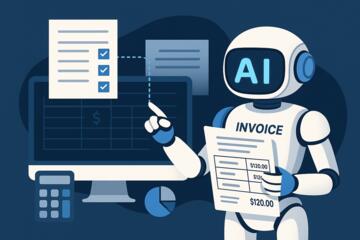
This guide explores the top 5 mistakes when implementing AI in finance, along with actionable steps to avoid them. Whether you use ERP systems like SAP and NetSuite or financial tools like QuickBooks, Oracle, or Workday, avoiding these mistakes can accelerate adoption and boost ROI.
Mistake #1: Poor Data Quality and Fragmented Systems
Why This Is the Biggest Barrier
AI in finance heavily relies on accurate, clean, and well-structured data. Yet many finance teams struggle with:
-
Siloed ERP and CRM systems
-
Inconsistent naming conventions
-
Duplicate vendor or customer records
-
Missing transaction data
-
Outdated policy information
A Harvard Business Review study notes that bad data costs companies an average of $12.9 million per year.
How This Impacts AI
Poor data leads to:
-
Unreliable forecasts
-
Incorrect anomaly detection
-
Misleading KPIs
-
Failed reconciliations
-
Slower audit processes
How to Fix It
-
Perform a full data audit.
-
Standardize labels, naming conventions, and financial categories.
-
Remove duplicate records in CRM/ERP systems.
-
Implement validation rules for all future financial entries.
-
Use ETL tools like Talend, Informatica, or Fivetran.
Pro Tip
Before implementing AI, create a Data Quality Score to monitor accuracy over time.
Mistake #2: Automating the Wrong Finance Processes
Why This Happens
Finance teams often try to automate:
-
Highly complex accounting procedures
-
Low-volume but complicated workflows
-
Tasks that require heavy professional judgment
This reduces efficiency instead of improving it.
What Should Be Automated Instead
Choose processes that are:
-
Repetitive
-
High-volume
-
Rule-based
-
Easy to validate
Best Examples for AI Automation
-
Invoice extraction and matching
-
Payroll ticket responses
-
Vendor onboarding
-
Budget variance summaries
-
Reconciliation prep
-
Fraud detection alerts
-
Tax document classification
Companies like Hilton and Rakuten started with simple automations before moving to advanced forecasting models.
Actionable Steps
-
Map all processes end to end.
-
Rank tasks by manual labor hours.
-
Start with the top 20% of repetitive tasks.
-
Expand only after success metrics appear.
Mistake #3: Lack of Clear ROI Metrics and KPIs
Why AI Projects Fail Without Measurable Goals
Finance leaders often launch AI initiatives without defining:
-
What success looks like
-
How efficiency will be measured
-
What KPIs matter most
This creates confusion among CFOs, IT teams, and accountants.
Essential ROI Metrics
Use these KPIs when evaluating AI in finance:
-
Hours saved per month
-
Error reduction percentage
-
Forecast accuracy improvement
-
Time to close monthly books
-
Vendor ticket reduction
-
Audit preparation time
-
AI usage adoption per department
Real Example
A mid-size company using Oracle NetSuite reduced month-end close time by six days after implementing AI reconciliation tools — but only realized the ROI because they measured baseline data before automation.
How to Avoid This Mistake
-
Define KPIs before implementation.
-
Set quarterly AI performance reviews.
-
Compare financial efficiency before vs. after deployment.
-
Share results with leadership to justify further investments.
Mistake #4: Ignoring Compliance, Privacy, and Security
Why Compliance Is Critical in Finance
Finance teams handle:
-
Banking details
-
Tax data
-
Payroll information
-
Vendor contracts
-
Audit files
AI tools must follow strict regulations.
Common Compliance Mistakes
-
Using free AI tools for sensitive data
-
Not checking where data is stored
-
Poor access controls
-
Missing audit trails
-
No model transparency
Regulations You Must Follow
AI in finance should comply with:
-
GDPR — data privacy
-
SOX — financial accuracy and reporting
-
SOC 2 — security controls
-
PCI-DSS — payment processing
-
ISO 27001 — information security
What Leading Companies Do
Organizations like Deloitte and KPMG use:
-
Private AI models
-
End-to-end encryption
-
Zero-access data architectures
-
Automated risk scoring
Action Steps
-
Choose enterprise-grade AI platforms.
-
Review vendor certifications.
-
Implement strict internal access policies.
-
Add audit logs to all AI workflows.
-
Set rules for sensitive data input.
Mistake #5: Not Preparing Employees for AI Adoption
Why Teams Resist AI
Accountants worry that:
-
AI might replace them
-
Their expertise may be undervalued
-
Workflows will change too fast
-
They won’t understand the new tools
How This Affects Implementation
Lack of training and communication leads to:
-
Low adoption
-
Misuse of tools
-
Increased errors
-
Project delays
How to Build AI Readiness
-
Provide training programs (Coursera, LinkedIn Learning).
-
Offer role-based guidelines for AI usage.
-
Start with pilot groups before full rollout.
-
Celebrate employee contributions — not automation.
-
Explain how AI enhances, not replaces, accounting roles.
Companies like PwC train more than 60,000 employees annually on AI skills, proving that upskilling is critical for long-term success.
Bonus Mistake: Over-Relying on AI Without Human Validation
Why This Is Dangerous
AI is powerful but imperfect — especially in:
-
Financial forecasting
-
Compliance interpretation
-
Tax calculations
-
Fraud case prioritization
Human accountants must validate all AI recommendations.
Best Practice
Use a human-in-the-loop model:
-
AI handles the heavy lifting
-
Accountants approve, adjust, or reject outputs
This ensures accuracy and reduces risk.
Author’s Insight
In one financial transformation project I led, the company wanted to automate all accounting workflows at once, from forecasting to tax compliance. The problem? Their data was inconsistent across three ERP systems, and no KPIs were defined.
The result:
-
Forecast accuracy worsened
-
Employees mistrusted the system
-
Compliance officers flagged issues
-
The CFO grew frustrated
We stepped back and rebuilt the strategy:
-
Cleaned data for 90 days
-
Automated only invoice intake and vendor queries
-
Trained teams
-
Introduced KPIs
Within six months:
-
Manual workload dropped 38%
-
AP processing time decreased by 50%
-
Errors reduced significantly
-
Employees embraced AI rather than feared it
The biggest lesson:
AI succeeds only when data, processes, and people are ready for it.
Conclusion: Avoiding AI Mistakes Leads to Stronger Financial Outcomes
Implementing AI in finance offers enormous potential — but only if organizations avoid the most common pitfalls. By improving data quality, choosing the right processes, measuring ROI, ensuring compliance, and preparing teams for change, companies can unlock the full value of AI technology.
The takeaway is clear:
AI doesn’t replace finance teams; it enhances them.
Avoiding these top mistakes sets the foundation for long-term efficiency, accuracy, and innovation.