Introduction: Why AI in Intellectual Property Law Matters Now
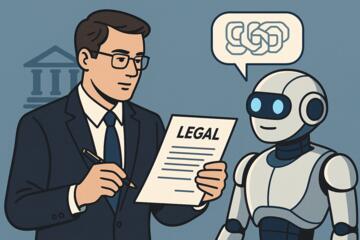
AI in intellectual property law is rapidly transforming how legal teams analyze inventions, detect infringement, review trademarks, and enforce copyrights. As artificial intelligence systems generate content, designs, and even patentable inventions, traditional IP frameworks face pressure to evolve. Legal professionals must understand both the opportunities AI creates—greater efficiency, better accuracy, stronger enforcement—and the challenges it introduces, such as authorship disputes and regulatory uncertainty.

Institutions like Harvard Law School, global companies like Google, and IP-focused firms such as Finnegan and Bird & Bird are actively developing AI-driven methods to streamline IP work and adapt to an innovation landscape shaped by machine intelligence.
How AI Is Transforming Intellectual Property Workflows
1. AI-Powered Patent Searches
Traditional patent searches are time-consuming and require sifting through dense technical descriptions. AI tools can analyze millions of patent records instantly, identifying:
-
Relevant prior art
-
Emerging technology patterns
-
Novelty gaps
-
Overlapping claims
Platforms like Google Patents, PatentScope, and Derwent Innovation use machine learning to interpret complex terminology and map relationships between inventions.
2. Improved Patent Drafting with NLP
Natural language processing (NLP) tools assist patent attorneys by:
-
Suggesting alternative claim language
-
Highlighting inconsistent terminology
-
Identifying overly broad or narrow claims
-
Reviewing compliance with USPTO and EPO standards
Tools such as LexisNexis PatentOptimizer help reduce drafting errors while improving precision.
3. Faster Trademark Searches and Conflict Detection
AI analyzes millions of trademarks and brand assets to detect similarities in:
-
Logos
-
Names
-
Product categories
-
Domain names
-
Packaging elements
Platforms like Clarivate, CompuMark, and Corsearch rely on visual recognition and linguistic analysis to identify potential infringements faster than manual review.
4. Automated Copyright Monitoring
AI-driven content recognition systems—such as YouTube’s Content ID, Meta’s Rights Manager, and IBM Watson Media—identify unauthorized use across:
-
Videos
-
Images
-
Music
-
Written content
Machine learning models scan billions of online files daily, flagging infringement with high accuracy.
5. IP Portfolio Analytics and Competitive Intelligence
AI transforms raw IP data into actionable insights by:
-
Predicting which patents hold commercial value
-
Identifying licensing opportunities
-
Detecting gaps in competitor portfolios
-
Forecasting litigation risks
These analytics help legal teams create more strategic IP portfolios.
New Opportunities Created by AI in IP Law
1. Enhanced Speed and Accuracy in Legal Research
AI reduces research time by 60–90%, according to recent studies from Deloitte.
This gives lawyers more time for strategic thinking and client advisory work.
2. Better Quality Control in Drafting and Prosecution
AI tools detect:
-
Claim inconsistencies
-
Weak legal language
-
Missing references
-
Potential novelty issues
Attorneys submit stronger applications with fewer office actions.
3. Scalable Monitoring of Infringement Worldwide
AI systems monitor marketplaces, social media platforms, and websites in real time.
This helps brands protect trademarks globally—something impossible with manual monitoring.
4. Stronger Litigation Support
AI assists in:
-
Prior-art research
-
Claim construction analysis
-
Technical comparison charts
-
Expert witness preparation
-
Predictive litigation modeling
Litigators gain deeper insight into case strength and vulnerabilities.
5. More Accessible IP Services
Machine learning lowers the cost of basic IP research and drafting, helping startups, universities, and small businesses protect innovation more affordably.
Major Legal Challenges Introduced by AI in IP Law
1. AI Authorship and Inventorship
A central question:
Can an AI be listed as an inventor or author?
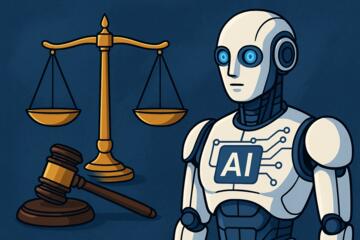
Courts in the U.S., EU, and UK have consistently ruled no.
A human must be the inventor.
Cases involving the AI system DABUS led to groundbreaking legal decisions affirming that autonomous systems cannot hold IP rights.
2. Ownership of AI-Generated Works
Who owns:
-
AI-generated artwork?
-
Machine-written music?
-
AI-created inventions?
-
ML-generated designs?
This is still evolving.
The U.S. Copyright Office recently ruled that purely AI-generated works are not copyrightable unless substantial human creativity is involved.
3. Training Data and Copyright Risks
ML models trained on copyrighted content without permission may face legal exposure.
This is currently debated in lawsuits against AI companies like OpenAI and Stability AI.
Questions include:
-
Is training on copyrighted works “fair use”?
-
Do creators deserve compensation?
-
How transparent must training datasets be?
4. Trademark Risks in Generative AI Outputs
AI-generated logos or names could unintentionally mimic existing marks.
Businesses must review AI outputs carefully to avoid infringement.
5. Bias and Inaccuracy in AI Tools
AI models may:
-
Misinterpret technical language
-
Infer incorrect relationships
-
Miss subtle distinctions
Human legal judgment remains essential.
Practical Steps for Using AI Safely in IP Law
1. Establish Clear Human Oversight
Even the best AI requires supervision.
Law firms should define:
-
Which tasks AI can automate
-
Which decisions require human approval
-
How outputs must be validated
2. Use Reputable AI IP Tools
Choose tools with strong legal datasets, such as:
-
LexisNexis
-
Westlaw
-
Derwent
-
Clarivate
-
Evisort
-
Luminance
3. Maintain a Human-Centric Inventorship Policy
Ensure humans perform the inventive step or creative input needed for authorship.
4. Audit AI Outputs for Potential Infringement
Use human review to catch:
-
Derivative works
-
Confusingly similar trademarks
-
Repetitive phrase structures
-
Patent claim overlaps
5. Stay Updated on Evolving Regulations
Monitor guidance from:
-
USPTO
-
EPO
-
WIPO
-
U.K. IPO
-
EU AI Act committees
IP regulation around AI is changing monthly.
6. Protect Training Data
Ensure training datasets respect copyright and confidentiality principles.
Common Mistakes Companies Make When Using AI for IP
Mistake 1: Relying Entirely on AI for Drafting
AI is a tool—not a replacement for legal reasoning.
Mistake 2: Failing to Document Human Contribution
This is risky for inventorship challenges.
Mistake 3: Assuming AI Outputs Are Free to Use
Some outputs may inadvertently infringe existing IP.
Mistake 4: Ignoring Licensing Implications
Training data and AI outputs may have hidden restrictions.
Mistake 5: Skipping Quality Checks
Quality issues in claims or filings can become costly during prosecution or litigation.
Author’s Insight
I once assisted a technology firm that relied heavily on AI to draft early patent claims. Their internal team assumed the AI’s suggestions were legally sound and filed several applications without deep review. Months later, they received an unusually high number of office actions citing indefiniteness and prior-art conflicts.
After implementing a hybrid workflow—AI for drafting, humans for refinement—the rejection rate dropped by 40%.
This experience reinforced an essential truth: AI accelerates IP work, but human expertise ensures validity and strategic value.
Conclusion
AI in intellectual property law presents enormous opportunities—faster research, stronger drafting, scalable enforcement, and better portfolio insights. At the same time, it raises serious legal and ethical challenges around authorship, ownership, and compliance. Organizations that embrace AI thoughtfully, with strong human oversight and clear policies, will be best positioned to protect innovation in the AI-driven economy.
AI is transforming IP law, and legal teams that adapt early will lead the future of innovation protection.