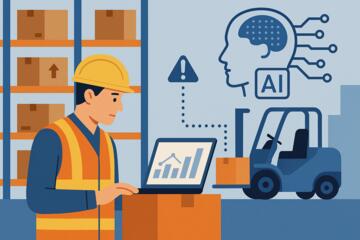
Introduction: Why AI Tools for Supply Chain Management Are No Longer Optional
The demand for AI tools for supply chain management has exploded in recent years. From global disruptions to rising transportation costs and shifting consumer expectations, companies now require more than manual forecasting and spreadsheets. Artificial intelligence offers a powerful solution: real-time predictive insights, demand sensing, automated planning, risk monitoring, and end-to-end visibility across suppliers, warehouses, and logistics operations.
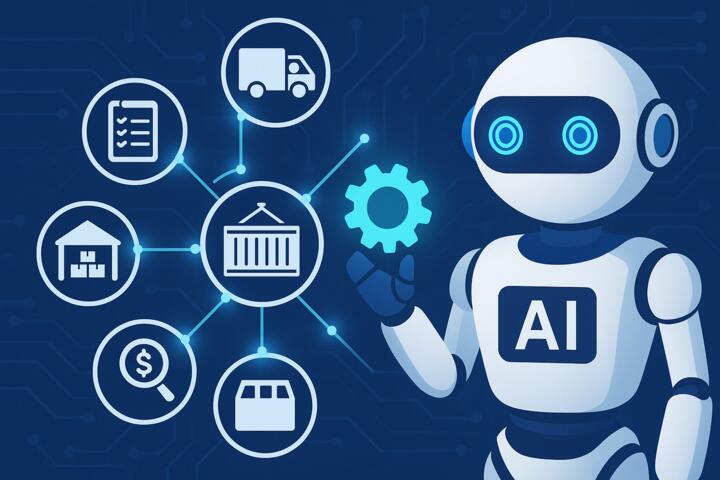
Major corporations like Amazon, Walmart, Maersk, DHL, and PepsiCo already rely on AI-driven platforms to manage inventory, reduce costs, and mitigate disruptions. Today, even mid-sized businesses can access the same advantages thanks to cloud-based AI tools.
This article explores the best AI tools for supply chain management, how they work, their key features, and how to choose the right one for your organization.
What AI Brings to Modern Supply Chain Management
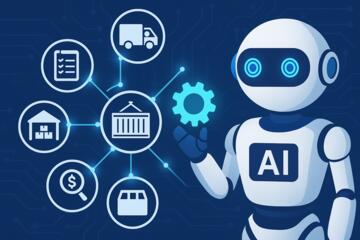
The 5 Core Capabilities AI Delivers
AI enhances supply chain operations in several transformative ways:
-
Demand forecasting
-
Inventory optimization
-
Route and logistics planning
-
Supplier risk assessment
-
Warehouse automation
With AI, companies can make decisions based not only on historical data, but on real-time signals, including weather forecasts, market trends, geopolitical events, and even social media patterns.
Industry Stats
-
McKinsey reports AI-powered forecasting reduces errors by 30–50%.
-
Deloitte found that 79% of companies using AI in supply chain operations saw increased efficiency.
-
Gartner predicts that by 2027, 60% of supply chain organizations will adopt AI and machine learning.
Top AI Tools for Supply Chain Management
Below are the leading AI-powered platforms used by global brands, categorized by specialty.
1. IBM Watson Supply Chain – Best for Predictive Insights
Key Features
-
Real-time visibility dashboards
-
Cognitive analytics for supply chain risk
-
Predictive demand modeling
-
Automated workflow intelligence
IBM Watson leverages advanced machine learning and natural language processing to monitor disruptions in real time—including weather alerts, customs issues, and supplier delays.
Who Uses It
-
Lenovo
-
Lufthansa
-
Woodside Energy
Best For
Large enterprises needing global risk intelligence and predictive insights.
2. Llamasoft (now Coupa Supply Chain) – Best for Scenario Planning
Key Features
-
Network optimization
-
Scenario modeling (cost, emissions, risk)
-
Transportation planning
-
Inventory balancing
Llamasoft gained global recognition for its AI-powered simulation tools that help companies test thousands of “what-if” scenarios.
Who Uses It
-
Nike
-
Unilever
-
Danone
Best For
Companies optimizing supply networks or undergoing restructuring.
3. SAP Integrated Business Planning (SAP IBP) – Best for Enterprise-Level Forecasting
Key Features
-
Demand sensing
-
Inventory management
-
Sales & operations planning
-
Machine learning recommendations
SAP IBP combines traditional ERP strength with AI-driven optimization.
Who Uses It
-
Johnson & Johnson
-
3M
-
Coca-Cola Hellenic
Best For
Organizations already using SAP ERP that need AI forecasting.
4. Oracle SCM Cloud – Best End-to-End AI Automation
Key Features
-
AI-driven procurement
-
Intelligent logistics
-
Predictive maintenance
-
Real-time order tracking
Oracle SCM uses machine learning to automate repetitive tasks in procurement, inventory control, and logistics.
Who Uses It
-
FedEx
-
Siemens
-
Pratt & Whitney
Best For
Enterprises requiring unified AI across procurement, manufacturing, and logistics.
5. Blue Yonder (JDA) – Best for Retail & E-Commerce
Key Features
-
AI-powered demand forecasting
-
Automated replenishment
-
Warehouse task optimization
-
Dynamic delivery scheduling
Blue Yonder is highly popular among retailers due to its strong forecasting and replenishment algorithms.
Who Uses It
-
Walmart
-
Starbucks
-
Carrefour
Best For
Retail and grocery chains focused on real-time inventory planning.
6. FourKites – Best for AI-Driven Logistics Visibility
Key Features
-
Predictive ETA
-
Real-time shipment tracking
-
Automated alerts
-
Carrier performance analytics
FourKites uses machine learning to predict delays and optimize delivery timelines.
Who Uses It
-
PepsiCo
-
Best Buy
-
AB InBev
Best For
Companies seeking transparency in freight and last-mile delivery.
7. o9 Solutions – Best for Integrated Planning and Forecasting
Key Features
-
AI forecasting engine
-
Supply chain knowledge graph
-
Integrated business planning
-
Real-time performance dashboards
o9 Solutions is known for its digital twin capability, enabling full visualization of supply chains.
Who Uses It
-
Starbucks
-
Estée Lauder
-
Bridgestone
Best For
Large enterprises needing advanced, cross-department forecasting.
What to Look For in an AI Supply Chain Tool
1. Real-Time Data Capabilities
A modern supply chain cannot rely only on historical data. Look for tools that integrate:
-
IoT sensors
-
Telematics
-
Weather data
-
Supplier performance feeds
-
Customs and port information
2. Integration with Existing Systems
Your tool should connect easily to:
-
ERP (SAP, Oracle, NetSuite)
-
WMS and TMS
-
CRM systems
-
E-commerce platforms
3. Scalability
AI workloads grow as your supply chain grows. Choose platforms that scale horizontally and vertically.
4. Predictive and Prescriptive Analytics
Predictive analytics tells you what may happen.
Prescriptive analytics tells you what to do.
A good tool should offer both.
5. User-Friendly Interface
AI tools must serve planners, not just data scientists.
Look for:
-
Drag-and-drop dashboards
-
Automated insights
-
Custom alerts
-
Clear visualizations
Common Mistakes When Choosing AI Supply Chain Tools
Mistake 1: Expecting Immediate ROI
AI requires:
-
Clean data
-
Proper integration
-
Staff training
Immediate returns are rare.
Mistake 2: Ignoring Change Management
Even the best AI platform fails if teams don’t adopt it.
Mistake 3: Underestimating Data Quality
Bad data leads to inaccurate forecasts.
Mistake 4: Choosing Tools Without Industry Fit
Retail, manufacturing, aviation, and food sectors require different solutions.
Mistake 5: Not Preparing for Scalability
A small pilot may work—but what about full deployment?
Actionable Steps to Integrate AI into Supply Chain Operations
Step 1: Run a Digital Maturity Assessment
Evaluate:
-
Data readiness
-
Process automation levels
-
Integration gaps
Tools like Deloitte’s Supply Chain Maturity Framework can help.
Step 2: Start with a Pilot Project
Examples:
-
Optimize a single warehouse
-
Improve demand forecasting for one region
-
Test predictive ETA for a small freight segment
Step 3: Train Your Teams
Use resources from:
-
Coursera
-
Harvard online programs
-
MIT Supply Chain Management courses
Step 4: Implement Gradually
A phased rollout avoids disruption and ensures learning at each stage.
Step 5: Monitor KPI Impact
Measure:
-
Forecast accuracy
-
Inventory turnover
-
Fulfillment speed
-
On-time delivery rate
-
Transportation cost per unit
Author’s Insight
Working closely with supply chain teams over the years, I’ve seen the biggest breakthroughs occur when companies stop viewing AI as a tool and start seeing it as a strategic partner in their operations. One global distributor I worked with improved forecast accuracy by 42% within six months simply by combining AI demand sensing with improved data hygiene. The most successful companies treat AI as a long-term investment—not a quick fix—and build internal expertise around it.
Conclusion
The best AI tools for supply chain management are not just technological upgrades—they’re essential components of modern, resilient operations. Platforms like IBM Watson, SAP IBP, Blue Yonder, and FourKites offer powerful capabilities to forecast demand, reduce costs, improve visibility, and mitigate risks. By selecting the right tool and implementing it strategically, businesses can achieve significant competitive advantages in a rapidly changing global market.