Introduction: The Rise of Smart Warehouses
In today’s era of global e-commerce and high-speed logistics, warehouses are no longer just storage facilities — they’re intelligent ecosystems. At the heart of this revolution lie AI inventory management systems, powering what we now call smart warehouses.
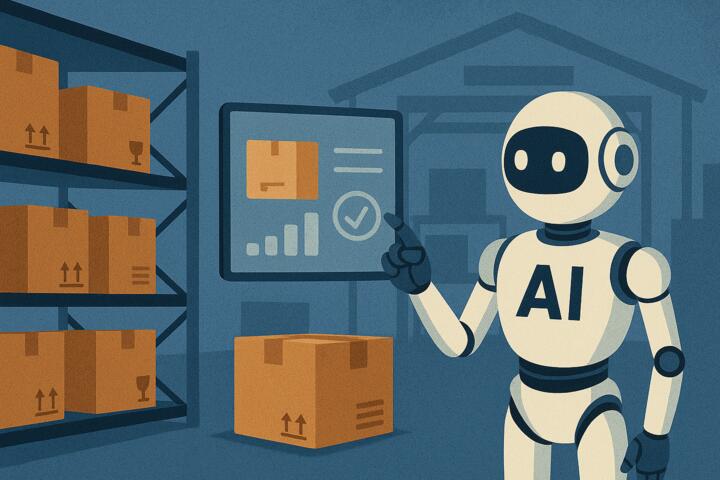
These systems use artificial intelligence, robotics, and Internet of Things (IoT) sensors to monitor stock, predict demand, and automate workflows in real time. According to McKinsey & Company, AI-driven warehouses can reduce operational costs by up to 30% while improving order accuracy to 99.9%.
If your business is still relying on spreadsheets or manual tracking, it’s time to explore how smart warehouses can redefine efficiency, accuracy, and scalability.
What Is a Smart Warehouse?
A smart warehouse combines advanced technologies — AI, machine learning (ML), IoT, and robotics — to automate warehouse operations.
These systems don’t just record inventory; they think, learn, and optimize. From restocking alerts to predictive analytics, they help businesses maintain perfect inventory balance and minimize human error.
Key technologies include:
-
AI-powered inventory management software
-
Automated guided vehicles (AGVs) and robots
-
IoT sensors for real-time tracking
-
Computer vision systems for barcode-free scanning
-
Cloud-based dashboards for global visibility
Together, they create a dynamic ecosystem that can adapt to changing business needs and consumer demand.
How AI Inventory Management Systems Work
AI inventory management systems analyze massive datasets from various sources — sales channels, warehouse sensors, supplier databases, and delivery logs — to make data-driven decisions automatically.
Here’s how it typically works:
-
Data Collection: IoT devices capture metrics such as stock levels, temperature, and movement patterns.
-
AI Analysis: Machine learning models identify trends, detect inefficiencies, and forecast future needs.
-
Automation Execution: Systems trigger automated actions — reorder supplies, assign robots to shelves, or notify staff.
-
Continuous Learning: AI continuously improves predictions as it processes more data over time.
Example:
Amazon’s fulfillment centers use AI and robotics to handle over 350 million SKUs efficiently, automating everything from storage optimization to delivery routing.
Benefits of Smart Warehouses and AI Inventory Systems
1. Real-Time Visibility
AI-powered dashboards provide real-time updates on stock availability, item locations, and inbound/outbound logistics.
This visibility reduces overstocking and stockouts — two of the most common pain points in traditional inventory systems.
2. Predictive Analytics for Demand Forecasting
AI analyzes sales history, seasonality, and market trends to predict future inventory needs.
For example, Walmart uses predictive models to adjust inventory in real-time, preventing shortages during peak sales events.
3. Reduced Human Error
Manual inventory tracking is error-prone. AI ensures accuracy in stock counts and data entry, improving fulfillment precision and customer satisfaction.
4. Automation and Labor Efficiency
Robots and AI systems automate repetitive tasks — such as picking, sorting, and labeling — allowing human employees to focus on strategy and oversight.
5. Enhanced Scalability
As your business grows, AI systems adapt to handle increased data loads and transaction volumes without compromising speed or accuracy.
6. Cost Optimization
By balancing supply and demand, AI helps minimize holding costs, reduce waste, and avoid unnecessary procurement.
Real-World Examples of Smart Warehousing
Amazon Robotics
Amazon’s smart warehouses use AI algorithms and 520,000 robots to move goods, sort packages, and optimize space. Each robot communicates in real time, ensuring zero traffic bottlenecks.
DHL’s Vision Picking System
DHL partnered with Google Glass to develop an AI-assisted “vision picking” system that helps warehouse employees identify items faster, increasing productivity by 25%.
Siemens’ Digital Logistics
Siemens integrates AI with digital twin technology, simulating warehouse layouts to test process improvements before applying them in real time.
Alibaba’s Cainiao Smart Logistics
Cainiao warehouses in China use AI and robotic arms to process over 1 million packages per day, achieving near-perfect accuracy and delivery speed.
These examples show how leading corporations leverage AI to redefine logistics performance.
Key Features to Look for in an AI Inventory Management System
When choosing an AI inventory management solution for your smart warehouse, prioritize the following features:
-
Predictive Forecasting Tools – AI algorithms that anticipate demand fluctuations.
-
Real-Time Tracking – IoT-based updates on stock movement and asset location.
-
Integration Capabilities – Compatibility with ERP, CRM, and e-commerce systems.
-
Automated Reordering – AI-triggered purchase orders when stock levels fall below thresholds.
-
Warehouse Robotics Support – Seamless control and coordination of robotic equipment.
-
Advanced Analytics Dashboard – Clear visualizations for data-driven decisions.
-
Scalability and Cloud Access – Centralized control across multiple locations.
Leading tools offering these features include Oracle NetSuite WMS, Infor CloudSuite, SAP Extended Warehouse Management, and Locus Robotics.
How to Implement AI in Your Warehouse
Step 1: Assess Your Current System
Identify gaps in your existing operations. Are your stockouts frequent? Do you lack real-time visibility? Create a baseline for improvement.
Step 2: Choose a Scalable AI Platform
Select software that integrates with your current ERP and supply chain tools. Cloud-based systems like Microsoft Dynamics 365 and Fishbowl Inventory offer flexibility and multi-site visibility.
Step 3: Integrate IoT and Sensors
Deploy IoT devices to track movement, temperature, or RFID tags. These sensors feed live data into your AI system.
Step 4: Train Employees
AI doesn’t eliminate human roles—it augments them. Offer training programs to help staff interpret AI insights and manage automated systems.
Step 5: Monitor and Optimize
Review key performance metrics (inventory accuracy, fulfillment time, order accuracy) and continuously adjust based on AI recommendations.
Common Mistakes to Avoid in AI Warehouse Implementation
-
Ignoring Data Quality:
AI is only as good as the data it receives. Clean and standardize your records before integration. -
Over-Automation:
Don’t automate every task at once. Start small—focus on high-impact areas like demand forecasting or restocking. -
Neglecting Cybersecurity:
Protect sensitive logistics data with encryption, access controls, and regular audits. -
Underestimating Change Management:
Employees must understand how AI improves, not replaces, their roles. -
Failing to Measure ROI:
Set measurable goals—cost savings, error reduction, or time-to-ship improvements—to track value over time.
Advantages Beyond Inventory Control
Smart warehouses do more than manage stock — they reshape entire supply chains.
1. Sustainability
AI optimizes storage space and delivery routes, cutting waste and carbon emissions. According to Accenture, AI can reduce logistics-related emissions by up to 15%.
2. Better Customer Experience
Faster, more accurate deliveries improve customer satisfaction and loyalty. AI even predicts delivery delays and suggests alternatives.
3. Business Intelligence
AI systems convert operational data into actionable insights for forecasting, supplier performance, and workforce planning.
Author’s Insight
Having worked with supply chain automation for over a decade, I’ve witnessed how quickly AI turns chaos into clarity.
One of my clients, a mid-sized retailer, faced monthly losses due to miscounts and delays. After implementing Oracle NetSuite’s AI-powered WMS, they achieved 97% accuracy within six months and cut operational costs by 22%.
My biggest takeaway? The secret isn’t just the technology—it’s how you align AI with human expertise. Smart warehouses succeed when machines and people collaborate seamlessly toward the same goal: efficiency and precision.
Conclusion: The Future of Warehousing Is Intelligent
Smart warehouses powered by AI inventory management systems are setting new standards for efficiency, accuracy, and agility. By leveraging machine learning, IoT, and automation, businesses gain control over inventory, reduce waste, and respond faster to demand fluctuations.
Whether you’re a global enterprise or a growing e-commerce brand, investing in AI-driven inventory solutions isn’t just a tech upgrade—it’s a strategic advantage for the future of logistics.
Adopt AI today, and turn your warehouse into a true competitive asset.