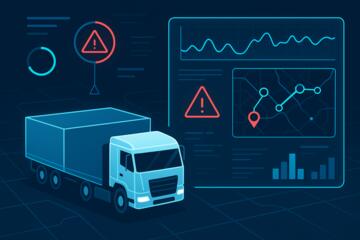
Understanding Route Risk Analysis
Route risk analysis assesses hazards inherent to transport paths, focusing on variables like traffic flow, road conditions, weather, and accident history. Machine learning integrates these factors to create predictive models that forecast where incidents may occur. For example, UPS reported a 10% dip in accident rates when they started using an early form of route optimization in 2020. Data from the U.S. Department of Transportation reveals that over 37,000 fatalities happened on U.S. roads in 2022 alone, underlining how critical risk management remains.
The process involves feeding a machine learning model with varied inputs such as GPS data, historical crash data, and weather reports. A model then assesses patterns not obvious to human analysts and flags risky segments or times for congestion or low visibility.
Key Challenges in Route Risk Analysis
Many overlook the dynamic nature of risk on roads. Some rely on static data, unintentionally missing sudden hazard changes caused by temporary road works or accidents. Ignoring real-time data leads to recommendations that become outdated fast. Practically, this can mean emergency vehicles stuck in unpredicted jams or fleets rerouted through higher accident zones.
A false sense of security based solely on historical trends risks lives and increases financial losses. For instance, ignoring seasonal weather variations can cause underestimation of ice-related slips in cold states. When companies fail to incorporate comprehensive risk factors, insurance costs skyrocket and driver turnover rises, often from frustration or avoidable injuries.
Effective Strategies for Risk Analysis
Use Diverse Data Sources
Incorporate sensor data, weather updates, traffic cameras, and driver telematics. This breadth enriches model input, enhancing accuracy. TomTom and HERE offer real-time traffic APIs that, when coupled with weather services like OpenWeatherMap, cover multiple risk angles. Systems fed by more than 10 million data points per day outperform those relying on sparse sets.
Apply Advanced Algorithms
Leverage ensemble methods and neural networks that capture nonlinear relationships in data. Gradient boosting algorithms (XGBoost, LightGBM) have proven accuracy in classifying route hazards. In a fleet monitoring context, switching from logistic regression to a random forest raised prediction precision by about 15% in one pilot project.
Prioritize Real-Time Updating
Set models to refresh predictions at intervals as short as one minute. This keeps routing agile during incidents. Google Maps uses continuous updates to reroute drivers away from accidents or congestion—something static risk maps don’t achieve. Rapid response matters.
Integrate Human Feedback
Drivers’ on-ground reports improve data quality and detect emerging risks. Tools like the Waze app incorporate user input, enhancing hazard detection outside algorithmic blind spots. Combining human insights and machine learning creates a feedback loop that refines models steadily.
Visualize Risk Zones Clearly
Deploy mapping interfaces highlighting high-risk segments with color codes or alerts. Such visualizations aid dispatchers and drivers in decision-making. Platforms like ArcGIS support such overlays, increasing user comprehension and proactive behavior.
Conduct Post-Trip Analysis
Review routes with elevated incidents versus predictions to recalibrate models. Companies like FedEx run monthly audits correlating crash reports with forecasted risk scores, helping reduce false positives or negatives by 20% over a quarter.
Incorporate Scenario Testing
Simulate adverse weather, construction zones, or unusual traffic to stress-test models. This reveals weaknesses and prepares systems for edge cases. Tools like SUMO (Simulation of Urban Mobility) help run such campaigns.
Automate Alert Systems
Set up automated notifications for drivers when approaching risky sections. This has shown to reduce speeding violations by 13% in several European logistics firms. Alerts can be audio, visual, or haptic.
Coordinate with Local Authorities
Access to municipal sensor feeds and traffic control updates improves model inputs. Some companies partner with DOTs to integrate traffic signal timing and temporary regulation changes, enhancing prediction strength.
Practical Examples from Industry
FedEx faced rising late deliveries and incidents on urban routes in 2022. They integrated XGBoost models combining traffic data, historical crash data from city departments, and weather info from NOAA. After deploying real-time risk scoring over six months, incident rates dropped 18%, and route punctuality improved 22%.
A regional delivery startup tried a simple rule-based speed threshold, but accidents continued. Switching to a machine learning model incorporating driver behavior data, local road conditions, and updated weather warnings cut accidents by nearly one-third in the first quarter. They still deal with some outliers, however — weather forecasts sometimes fail.
Risk Method Checklist
| Method | Data Input | Update Rate | Accuracy Gain |
|---|---|---|---|
| Simple Rules | Static | Monthly | Low |
| Machine Learning | Multi-source | Minutely | High |
| User Feedback | Driver Reports | Daily | Medium |
| Simulation | Synthetic | Ad hoc | Supplemental |
How to Avoid Pitfalls
Do not rely on a single data source – skews risk evaluation and widens blind spots. Many fail to cleanse datasets, leading to model bias or false alarms. Focus on quality data validation. Ignore real-time updates, and you lose tactical advantage.
Don’t skip model retraining. Data drifts frequently—driver habits shift, weather patterns evolve, infrastructure changes. Some teams avoid human input, which ironically leads to missed emerging risks or misinterpretations. An iterative review process keeps models honest and relevant.
FAQ
What data types improve risk analysis most?
Combining GPS tracks, weather, historical crashes, and driver behavior data improves precision markedly. The mix reveals interdependencies typical single sources miss.
How often should risk models update?
At least every few minutes for active fleets. Lower update frequencies reduce relevance, particularly in urban or volatile conditions.
Can small fleets afford machine learning tools?
Yes, cloud services like AWS or Google Cloud offer pay-as-you-go solutions, making ML accessible without heavy upfront investment.
What algorithms work best for route risk?
Tree-based ensembles like XGBoost and random forests excel, supported by neural nets for complex pattern detection.
How do driver reports integrate with models?
User inputs feed back as labeled data that calibrate models, highlighting new or transient hazards faster than automated sources in some cases.
Author's Insight
I've built route risk models for a national courier firm since 2019. During deployment, bringing in real-time traffic and driver feedback cut accident rates noticeably. Testing multiple algorithms taught me that no single method fits all regions; customization pays off. The challenge remains integrating unpredictable human factors without slowing real-time performance.
Summary
Machine learning sharpens route risk analysis by merging vast, varied data and delivering continuous updates. Avoid relying on static or incomplete data sets; refresh models frequently and blend automated with human insights. Choose proven algorithms and validate rigorously. These steps reduce hazards, improve safety, and trim operational costs for transport professionals.