Introduction: Why Digital Twins Matter in Modern Logistics
The role of digital twins in modern logistics has grown rapidly as supply chains become more complex, global, and time-sensitive. A digital twin is a virtual, real-time representation of a physical asset or process—such as a warehouse, transport network, delivery route, or production line. In logistics, digital twins allow companies to simulate operations, predict disruptions, and optimize performance without risking real-world consequences.
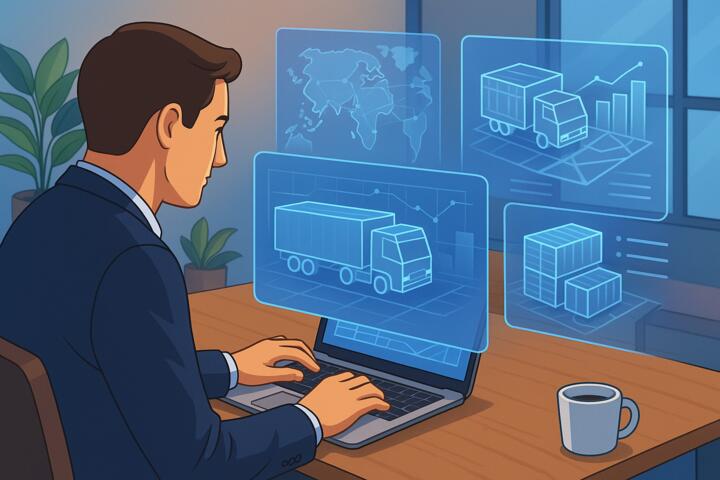
Companies like Amazon, DHL, Walmart, Siemens, and Maersk have adopted digital twin technology to improve routing, energy usage, inventory management, fleet performance, and customer service. With global supply chains under constant pressure, logistics teams now rely on digital twins to reduce errors, model scenarios, and make data-driven decisions.
What Are Digital Twins in Logistics?
A digital twin is a dynamic, digital replica of a logistics process or asset. Unlike static dashboards, digital twins update continuously based on real sensor data, machine learning, and IoT devices.
Core components of a digital twin
-
Real-time data integration
-
Predictive analytics and simulation
-
AI/ML optimization models
-
IoT sensors and telemetry
-
Scenario testing and forecasting
Digital twins replicate not only what is happening now, but also what could happen under different conditions.
Why Digital Twins Are Transforming Modern Logistics
1. Real-Time Visibility Across the Entire Supply Chain
Digital twins provide a live overview of:
-
Warehouse conditions
-
Transportation status
-
Inventory levels
-
Demand fluctuations
-
Distribution center performance
Logistics teams can monitor all operations from a single digital interface.
Example
DHL uses digital twin models to visualize warehouse flow, enabling them to reduce congestion and improve worker efficiency.
2. Improved Forecasting and Demand Planning
Machine learning embedded in digital twins predicts:
-
Stockouts
-
Seasonal demand spikes
-
Supplier delays
-
Customer purchase behavior
A Harvard Business Review study reported that companies using digital twins improve forecasting accuracy by up to 25%.
Better forecasting leads to:
-
Smarter purchasing
-
Reduced waste
-
Lower carrying costs
3. Optimized Warehouse Layout and Operations
Warehouses are complex environments with thousands of moving parts—products, robots, forklifts, workers, conveyors, and picking routes.
Digital twins help optimize:
-
Storage layouts
-
Picking routes
-
Equipment placement
-
Workforce allocation
-
Traffic flow patterns
Amazon Robotics uses digital twins to test layout changes before applying them, reducing errors and downtime.
4. Reduced Delivery Times Through Route Simulation
Digital twins allow fleet managers to simulate:
-
Traffic patterns
-
Weather conditions
-
Fuel efficiency
-
Driver behavior
-
Multi-stop delivery routes
Outcome
Faster deliveries and lower transportation costs.
Walmart uses digital twins to plan last-mile delivery and reduce transportation inefficiencies.
5. Predictive Maintenance for Fleet and Equipment
Digital twins monitor:
-
Vehicle engine status
-
Tire health
-
Fuel consumption trends
-
Conveyor belt condition
-
Robotics wear and tear
This enables predictive maintenance—fixing issues before breakdowns occur.
Benefits
-
Lower repair costs
-
Longer equipment lifespan
-
Reduced downtime
Siemens uses digital twins for manufacturing and logistics machinery, predicting failures before they happen.
Key Use Cases of Digital Twins in Modern Logistics
1. Warehouse Digital Twins
Helps with:
-
Monitoring inventory
-
Forecasting capacity
-
Reducing picking errors
-
Modeling layout changes
-
Improving automation efficiency
Warehouses become safer, faster, and more predictable.
2. Transport and Fleet Digital Twins
Allows simulation of:
-
Delivery routes
-
Fuel usage
-
Maintenance schedules
-
Emergency scenarios
Fleet managers predict delays and reroute deliveries instantly.
3. Supply Chain Network Digital Twins
Provides a 360° map of suppliers, routes, cargo movement, and distribution centers.
Useful for:
-
Assessing geopolitical risks
-
Managing port bottlenecks
-
Optimizing multi-country shipping
-
Anticipating disruptions
Maersk relies on supply chain digital twins to navigate global shipping challenges.
4. Manufacturing and Logistics Integration Twins
Digital twins connect factory production schedules with logistics operations.
Benefits
-
Smoother production flow
-
Better delivery coordination
-
More accurate inventory forecasting
5. Customer Experience Optimization
Digital twins simulate customer demand, shipping experience, and service levels.
Brands use them to:
-
Improve delivery speed
-
Predict returns
-
Personalize shipping options
This leads to higher customer satisfaction and fewer service issues.
Technologies Behind Digital Twins in Logistics
IoT Sensors
Collect real-time data from:
-
Cargo containers
-
Vehicles
-
Warehouse machinery
-
GPS trackers
Artificial Intelligence and Machine Learning
Used for:
-
Forecasting
-
Pattern recognition
-
Optimization
-
Anomaly detection
Cloud Computing
Enables large-scale simulation and storage.
Platforms include:
-
AWS IoT TwinMaker
-
Microsoft Azure Digital Twins
-
IBM Digital Twin Exchange
Simulation Models
Used to model:
-
Process flow
-
Workforce scheduling
-
Route optimization
-
Energy consumption
Benefits of Digital Twins for Logistics Operations
-
Better decision-making
-
Higher operational efficiency
-
Reduced delays and bottlenecks
-
Lower maintenance costs
-
Faster deliveries
-
Optimized warehouse layouts
-
Stronger forecasting accuracy
-
Improved customer satisfaction
Digital twins replicate the entire logistics chain, making improvements easier and faster.
How to Implement Digital Twin Technology in Logistics
1. Start with a High-Value Area
Examples:
-
Warehouse picking process
-
Fleet routing
-
Inventory flow
Choose a use case that delivers measurable impact.
2. Integrate IoT and Data Sources
Data drives the digital twin.
You’ll need:
-
Sensors
-
GPS trackers
-
ERP system integration
-
Real-time dashboards
3. Choose a Digital Twin Platform
Top options:
-
AWS IoT TwinMaker
-
Siemens Teamcenter
-
Azure Digital Twins
-
PTC ThingWorx
Evaluate based on scalability, ease of integration, and analytics capabilities.
4. Build Predictive Models
Use machine learning to forecast:
-
Delays
-
Maintenance issues
-
Customer demand
5. Test Scenarios Before Implementing Changes
One of the biggest advantages of digital twins is risk-free experimentation.
Examples:
-
What happens if demand spikes 40%?
-
What if a supplier shuts down?
-
How does a new warehouse layout affect workflow?
Common Mistakes When Using Digital Twins in Logistics
Mistake 1: Creating a digital twin without clear goals
Always define the problem first.
Mistake 2: Poor data quality
Bad data equals bad predictions.
Mistake 3: Not involving operations teams
Employees must understand and trust the system.
Mistake 4: Overcomplicating the initial model
Start simple and scale gradually.
Mistake 5: Ignoring cybersecurity
Digital twins require strong encryption and access controls.
Author’s Insight
During a logistics optimization project, a client struggled with unpredictable delays at their main distribution center. We implemented a digital twin of their warehouse flow, including forklift routes, worker positions, and conveyor belt timing. Within weeks, bottlenecks became visible that had never been noticed before.
A small layout change—moving two loading bays—reduced average processing time by 18%.
This real case proved to me that digital twins reveal what humans simply cannot see in a chaotic, fast-moving environment.
Conclusion
The role of digital twins in modern logistics is becoming indispensable as supply chains grow more complex and customer expectations rise. Digital twins offer unmatched visibility, predictive capability, and simulation power—helping companies reduce costs, eliminate bottlenecks, and make smarter decisions.
Whether used for warehouse optimization, fleet management, or large-scale supply chain forecasting, digital twins represent the future of logistics efficiency. Now is the time for organizations to embrace this transformative technology and gain a competitive edge.