Beyond the Ledger
In a fully digital economy, bookkeeping ceases to be a historical record-keeping exercise and becomes a live data stream. Traditional batch processing—where receipts are collected and reconciled at the end of the month—is being replaced by "zero-touch" accounting. In this model, every transaction from a POS system or digital wallet is instantly categorized and mapped to the general ledger using machine learning algorithms.

For example, a modern SaaS startup using platforms like Stripe and Mercury no longer manually enters bank statements. API integrations push data directly into systems like Xero or QuickBooks Online. Research from Gartner suggests that by 2026, 80% of organizations will have shifted to automated financial closing processes. This shift reduces the "time to close" from weeks to minutes, providing a real-time pulse of the company's fiscal health.
Artificial Intelligence Integration
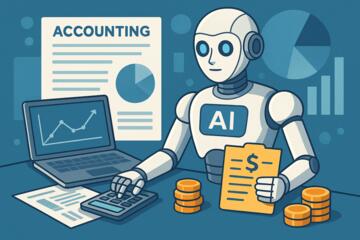
AI is the engine of modern bookkeeping, handling complex tasks like anomaly detection and predictive cash flow modeling. Unlike static rules-based systems, AI learns from historical patterns to identify potential fraud or tax misclassifications. Tools like Vic.ai are already processing millions of invoices with 95% accuracy, reducing manual labor costs by up to 80% for enterprise-level accounting departments.
Blockchain as a Truth Engine
The future of bookkeeping lies in triple-entry accounting, where transactions are verified on a distributed ledger. When Company A buys from Company B, the transaction is recorded in their respective books and simultaneously on a blockchain. This eliminates the need for manual reconciliation between parties. Organizations like Deloitte are already piloting blockchain solutions to create immutable audit trails, potentially reducing audit costs by 30-50%.
Real-Time Financial Reporting
We are moving away from the static "Profit & Loss" statement toward dynamic dashboards. Real-time bookkeeping allows stakeholders to see their burn rate and runway in 24/7 live environments. This is particularly vital for companies utilizing high-frequency trading or rapid-scale e-commerce models where a 30-day delay in financial data could result in catastrophic inventory or cash flow mismanagement.
Automated Regulatory Compliance
Digital economies demand digital tax authorities. In many jurisdictions, "Making Tax Digital" initiatives require real-time reporting of VAT and sales tax. Future systems will automatically calculate and remit taxes at the moment of sale, using tools like Avalara or TaxJar. This reduces the risk of human error and ensures that businesses are always audit-ready without the traditional end-of-year stress.
The Rise of Advisory Roles
As the "crunching" of numbers becomes automated, the role of the bookkeeper evolves into a Financial Data Analyst or Strategic Advisor. The focus shifts from "what happened" to "why it happened" and "what will happen next." This evolution requires a blend of accounting expertise and data science, moving the profession up the value chain from back-office support to C-suite strategy.
Data Fragmentation Risks
The primary pain point in a digital-first economy is the "Data Silo" effect. While tools like Shopify, PayPal, and Gusto provide excellent individual data, they often don't speak the same language. This fragmentation leads to "broken" ledgers where manual intervention is still required to bridge the gaps. Without a unified data strategy, businesses end up with multiple versions of the truth, leading to expensive errors during tax season.
Security is the other major concern. As financial data moves to the cloud, the risk of sophisticated phishing and ransomware attacks increases. A single compromised API key can lead to unauthorized fund transfers or the theft of sensitive payroll data. The cost of a financial data breach in 2024 averaged $4.45 million, highlighting that "going digital" requires a massive investment in cybersecurity infrastructure, not just accounting software.
Strategic Implementation
To future-proof your financial operations, start by centralizing your tech stack around an API-first accounting core. I recommend migrating from legacy desktop software to cloud-native platforms like NetSuite or Sage Intacct. These platforms act as a "Single Source of Truth," pulling data from across your organization via secure webhooks. Implementing this change can reduce administrative overhead by up to 40% within the first six months.
Standardize your data entry using OCR (Optical Character Recognition) tools like Dext or Hubdoc. These tools eliminate manual typing by extracting data from photos of receipts or digital PDFs with incredible precision. For a company processing 500 invoices a month, this can save over 20 hours of manual work. Furthermore, adopt a "Continuous Close" mentality—reconcile accounts daily. This keeps your data fresh and ensures that anomalies are caught within 24 hours rather than 30 days.
Finally, invest in employee upskilling. Your bookkeeping team needs to understand data flows and system integrations. Training staff to use BI (Business Intelligence) tools like Tableau or Power BI allows them to visualize financial data in ways that reveal growth opportunities. Companies that combine automated bookkeeping with advanced analytics see a 15% higher profit margin on average due to better resource allocation.
Case Studies in Digital Shifts
A global logistics firm with $50M in revenue was struggling with a 45-day delay in financial reporting due to manual spreadsheet reconciliation across 10 regional offices. By implementing a cloud-based ERP with automated intercompany eliminations, they reduced their monthly close time to 3 days. This allowed the CEO to pivot their shipping strategy mid-quarter, saving an estimated $1.2M in potential fuel surcharges.
A high-growth e-commerce brand was losing 2% of its revenue to unrecorded subscription cancellations and payment failures. They integrated an automated reconciliation tool that matched Stripe payouts to their bank feed in real-time. The result was a 100% recovery of "lost" transactions and a much clearer picture of their Customer Acquisition Cost (CAC) to Lifetime Value (LTV) ratio, facilitating a successful Series B funding round.
Standard vs. Digital Workflows
| Process | Legacy Bookkeeping | Future-State Digital |
|---|---|---|
| Data Entry | Manual (Keyboard/Paper) | Automated (OCR/API/IoT) |
| Reconciliation | Monthly/Quarterly | Continuous/Real-time |
| Verification | Random Sampling Audit | 100% Data Verification (AI) |
| Storage | Physical/Local Server | Immutable Cloud/Blockchain |
| Analysis | Descriptive (Past) | Predictive (Future Trends) |
Common Mistakes to Avoid
One fatal error is assuming that "Automated" means "Unsupervised." AI can still miscategorize a personal expense as a business one if the vendor name is ambiguous. You must implement "Human-in-the-Loop" (HITL) checkpoints where an expert reviews high-value or high-risk transactions. Trusting the software blindly can lead to significant tax liabilities or skewed financial metrics that misguide your business strategy.
Another mistake is ignoring "Shadow IT"—employees using apps with company cards that aren't integrated into the main accounting system. This creates dark spots in your financial data. Ensure your expense policy mandates the use of integrated corporate cards like Ramp or Brex, which automatically feed every swipe into your ledger. This simple move can eliminate 90% of missing receipt headaches and improve expense visibility by 100%.
FAQ
Will AI replace human bookkeepers?
AI will replace the "task" of data entry, but not the "profession" of bookkeeping. Humans are still required for complex tax planning, ethical decision-making, and interpreting data context that algorithms might miss.
Is cloud-based accounting safe?
Yes, provided you use enterprise-grade providers like Microsoft, AWS, or specialized fintech platforms. These services offer SOC 2 Type II compliance and multi-factor authentication, which is far more secure than an office-based server.
What is "Zero-Touch" accounting?
It is an accounting system where transactions flow from the source (bank/POS) to the ledger and are reconciled automatically without any manual keyboard input by a human.
How much does it cost to go digital?
For a small business, a modern tech stack (Accounting software + OCR + Bank integration) costs between $50-$150 per month. The ROI is usually realized within three months through saved time and reduced error rates.
How does blockchain affect audits?
Blockchain makes audits faster and more transparent. Instead of auditors asking for copies of invoices, they can view the cryptographically signed transaction on the ledger, drastically reducing the time spent on verification.
Author’s Insight
Having navigated the transition from paper ledgers to AI-driven systems, I can say that the "Digital Economy" is no longer a buzzword—it's a survival requirement. The biggest hurdle isn't the technology; it's the mindset of the finance team. In my experience, companies that treat bookkeeping as a strategic asset rather than a "compliance chore" grow twice as fast. My advice: don't wait for tax season to modernize. Start by automating your smallest, most repetitive task today, and the compound interest of that efficiency will transform your business in a year.
Conclusion
The future of bookkeeping in a fully digital economy is defined by speed, accuracy, and strategic insight. By moving away from manual entry and embracing AI, blockchain, and real-time data flows, businesses can unlock a level of financial clarity previously reserved for Fortune 500 companies. To stay competitive, prioritize system integration, invest in cybersecurity, and pivot your team toward data analysis. The goal is simple: let the machines handle the numbers so the humans can handle the growth.