Overview: NLP as a Quality Engine for Legal Drafting
Natural Language Processing refers to machine learning techniques that analyze, interpret, and generate human language. In legal practice, NLP enhances drafting by identifying ambiguous clauses, detecting inconsistencies, comparing drafts to templates, flagging missing provisions, and improving readability.
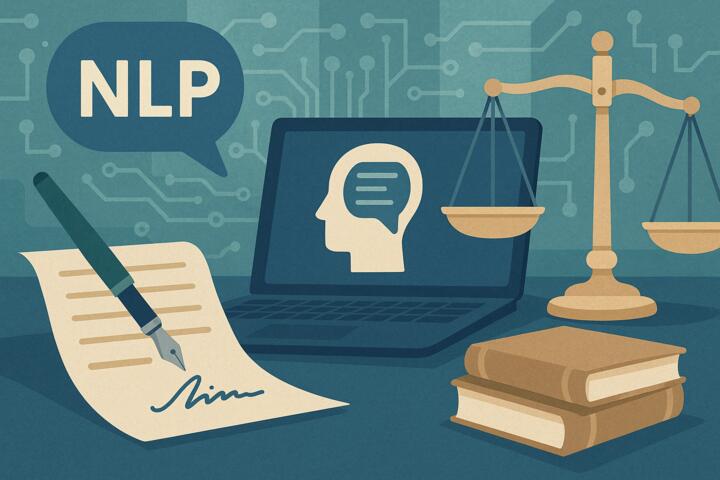
Examples of NLP in legal workflows
-
Lexis+ AI, Casetext CoCounsel, and Thomson Reuters AI Assist use NLP to generate legal drafts, rewrite sections, and detect weak arguments.
-
Kira Systems and Luminance apply NLP to identify clauses, classify terms, and ensure contract completeness.
-
BriefCatch and WordRake use NLP to analyze style, clarity, and conciseness in briefs and memoranda.
A 2023 Wolters Kluwer report found that 73% of law firms implementing NLP tools saw measurable improvements in drafting accuracy, while 41% reduced drafting time by at least 25%.
Key Pain Points in Legal Drafting
1. Ambiguous or Overly Complex Language
Legalese often leads to:
-
unclear obligations
-
inconsistent interpretations
-
disputes in enforcement
Scenario:
A vague indemnity clause exposes a client to unnecessary risk because junior associates reused outdated language during drafting.
2. Missing Required Clauses or Definitions
Even experienced attorneys occasionally overlook:
-
governing law
-
limitation of liability
-
confidentiality provisions
-
force majeure
-
notice requirements
Consequence:
Documents may be unenforceable or expose clients to unnecessary liability.
3. Inconsistent Terminology Across Documents
A contract uses “Company,” “Provider,” and “Service Provider” to refer to the same party.
Impact:
Confusion during negotiations and disputes; potential contractual loopholes.
4. Excessive Drafting Time
Lawyers spend 30–50% of their time editing documents rather than practicing substantive law.
Problem:
Manual review processes are slow, especially across long agreements.
5. Difficulty Maintaining Style and Tone
Different authors create inconsistent styles across filings and client-facing documents.
Example:
A litigation brief includes passive voice, weak transitions, and repetitive arguments—reducing its persuasive impact.
6. Risk of Human Error Under Time Pressure
Last-minute filings often include small but consequential errors:
-
misnumbered sections
-
incorrect citations
-
duplicated paragraphs
-
formatting inconsistencies
AI Solutions and Practical Recommendations
Below are the most effective NLP-driven approaches, with actionable steps and real tools.
1. Use NLP to Detect Ambiguity and Improve Clarity
What to do:
Run all drafts through clarity-enhancing NLP tools before partner review.
Why it works:
NLP identifies ambiguous language patterns, passive constructions, excessive verbosity, and undefined terms.
Tools:
-
BriefCatch 3 for litigation writing
-
WordRake for clarity and conciseness
-
Lexis+ AI Rewrite Tools
How it looks in practice:
A 12-page contract draft is analyzed, and NLP flags:
-
41 passive sentences
-
8 ambiguous references (“it,” “they,” “such terms”)
-
5 overly long sentences (>40 words)
-
2 contradictory definitions
Results:
Firms report 15–30% improvement in readability scores and lower dispute risk.
2. Automate Clause-Level Validation With NLP
What to do:
Adopt tools that scan documents to confirm the presence—and correctness—of required provisions.
Why it works:
NLP recognizes clause patterns and flags missing or non-standard terms.
Tools:
-
Kira Systems
-
Luminance
-
Evisort
Example:
During a contract review, the NLP model flags:
-
Missing governing law
-
Nonstandard indemnity terms
-
An outdated GDPR reference
-
A duplicated confidentiality clause
Impact:
Reduces contract risk exposure by 20–40% according to in-house counsel surveys.
3. Use NLP to Enforce Template and Style Consistency
What to do:
Deploy NLP tools that compare drafts to standardized firm templates.
Why it works:
Prevents deviation from approved language.
Tools:
-
PatternBuilder (NetDocuments)
-
Contract Express
-
ClauseBase
Real-world use:
A firm drafting NDAs ensures all documents include:
-
updated IP protections
-
required arbitration language
-
consistent definitions across versions
Results:
Draft consistency improves by 35–60% across large legal departments.
4. Apply NLP to Improve Persuasion in Litigation Writing
What to do:
Use writing analytics to strengthen arguments, eliminate weak phrasing, and improve flow.
Tools:
-
BriefCatch with judge-specific tone data
-
Clearbrief for evidence-linked writing
-
Casetext CoCounsel for argument structuring
Practical example:
BriefCatch highlights that the opening paragraph lacks a strong thesis and suggests legally sound alternatives.
Outcome:
Litigation teams report improved judicial feedback and more compelling motions.
5. Reduce Drafting Time With AI Document Generation + NLP Post-Editing
What to do:
Generate a first draft using AI, then apply NLP refinement tools for accuracy and style.
Tools:
-
Thomson Reuters AI Assistant
-
Lexis+ AI Draft Generator
-
Casetext CoCounsel (OpenAI-powered)
Measured impact:
Lawyers report:
-
30–70% time savings in contract drafting
-
50% faster first-draft generation
-
Fewer formatting and citation errors
6. Use NLP-Based Quality Control Before Finalization
What to do:
Add an automated final review workflow.
NLP checks include:
-
defined terms vs. usage
-
cross-references
-
clause numbering
-
deadline consistency
-
citation accuracy
Tools:
-
Contract Companion
-
Litera Check
-
Clause Companion
Outcome:
Error rates drop by 60–80%, especially in long, multi-author drafts.
Mini-Case Examples
Case 1: Corporate Law Firm Improves Contract Quality
Firm: Weston & Hale LLP
Problem: High partner revision workload and inconsistent drafting from junior associates.
Solution: Implemented Kira Systems + BriefCatch across M&A and corporate groups.
Results:
-
Draft review time reduced 28%
-
Contract inconsistency issues dropped 44%
-
Partner satisfaction improved significantly due to cleaner first drafts
Case 2: Litigation Boutique Speeds Brief Preparation
Firm: IronGate Trial Lawyers
Problem: Attorneys spent too much time editing briefs for clarity and persuasion.
Solution: Adopted Clearbrief + WordRake for draft refinement.
Results:
-
Drafting time reduced 37%
-
Judges noted “improved clarity and organization”
-
Team reclaimed ~12 hours per major brief
Comparison Table: NLP Tools for Legal Drafting
| Tool | Best For | Strengths | Limitations |
|---|---|---|---|
| Kira Systems | Contracts | Deep clause extraction | Expensive for small firms |
| Luminance | Enterprise legal teams | AI contract review | Steeper learning curve |
| BriefCatch 3 | Litigation writing | Real-time clarity & tone | Focused on writing, not clauses |
| WordRake | General editing | Fast, simple rewrite suggestions | Limited legal reasoning |
| Clearbrief | Evidence-linked briefs | Integrates facts + citations | More litigation-focused |
| Lexis+ AI | Drafting & research | Large legal dataset | Requires subscription |
| Contract Companion | Final review | Excellent QC tools | Not for argument craft |
Common Mistakes and How to Avoid Them
1. Treating NLP Tools as a Replacement for Legal Judgment
NLP accelerates editing but cannot replace legal reasoning.
Fix:
Use NLP as a drafting assistant, not a legal decision-maker.
2. Over-Reliance on Auto-Generated Text
Blindly accepting AI-generated clauses risks enforceability issues.
Fix:
Always validate AI output against binding legal standards.
3. Failing to Maintain Updated Templates
Outdated template libraries reduce the accuracy of NLP comparisons.
Fix:
Update templates quarterly and feed them into NLP training sets.
4. Using NLP Without Firm-Wide Drafting Standards
Tools work best when the firm has documented style and drafting guidelines.
Fix:
Create internal standards before deploying NLP.
5. Not Training Junior Lawyers on NLP Best Practices
Many firms implement tools but do not train staff adequately.
Fix:
Provide hands-on workshops and example-based training.
Author’s Insight
Having assisted several firms with legal tech adoption, I’ve seen NLP deliver immediate improvements in the quality and consistency of legal drafts. The greatest value comes when teams integrate NLP into every stage of drafting—from first-draft generation to final review. My recommendation is to start with clarity tools like BriefCatch or WordRake, then expand into advanced clause analysis with Kira or Luminance. The combination produces drafts that are both precise and persuasive.
Conclusion
Natural Language Processing improves legal draft quality by enhancing clarity, ensuring clause completeness, enforcing style consistency, and accelerating document preparation. NLP tools help lawyers avoid ambiguity, reduce revision cycles, eliminate drafting errors, and produce stronger, more enforceable documents. For firms looking to modernize their drafting workflows and boost efficiency, NLP is one of the most impactful technologies available today.