Overview: How AI Supports Modern Change Management
Change management traditionally relies on surveys, town halls, and manager intuition to assess how employees react to new tools, processes, or organizational structures. AI improves this by analyzing behavioral data, communication patterns, sentiment, and adoption metrics in real time.
Examples of AI in use today
-
Microsoft Viva Insights analyzes collaboration patterns and predicts change adoption risks.
-
Qualtrics XM AI identifies sentiment trends across thousands of employee comments instantly.
-
WalkMe, Whatfix, and Userlane use AI to guide employees through new software workflows.
-
Gong and Zoom IQ evaluate communication tone during leadership announcements.
A Gartner survey found that organizations using AI-powered change analytics increase adoption success rates by up to 47%, largely due to earlier detection of resistance and more personalized support.
Key Pain Points in Organizational Change
1. Poor Visibility Into Employee Readiness
Leaders often underestimate how prepared teams are for transformation.
Common problems:
-
relying on outdated surveys
-
lack of real-time sentiment analysis
-
assumptions instead of data-driven insights
Consequence:
Training and messaging miss the mark, resulting in slower adoption.
2. Ineffective Communication Strategies
Messages about change are often generic and delivered too late.
Real scenario:
A firm implements a new CRM system, but teams learn about it only days before rollout—leading to confusion, frustration, and resistance.
3. One-Size-Fits-All Training
Traditional training programs ignore individual skill gaps and learning preferences.
Impact:
Employees feel overwhelmed or underprepared, increasing negative sentiment.
4. Slow Identification of Resistance
Managers rely on anecdotal information instead of real-time analytics.
Consequence:
Resistance grows unnoticed until it becomes a major barrier, costing time and resources.
5. Lack of Adoption Tracking
Organizations often cannot measure:
-
which teams are using new systems
-
how effectively processes are being followed
-
where the friction points occur
Without adoption data, leaders cannot correct course.
AI Solutions and Actionable Recommendations
Below are the most effective ways AI accelerates change management, with specific tools and quantifiable results.
1. Use AI to Predict Employee Readiness and Resistance
What to do:
Use predictive analytics models to evaluate readiness levels based on behavior, communication patterns, productivity, and survey sentiment.
Why it works:
AI identifies risk areas weeks or months before they escalate.
Tools:
-
Microsoft Viva Insights
-
Qualtrics XM Predictive Analytics
-
Peakon Workday Insights
-
CultureAmp with machine learning-enabled sentiment scoring
Example:
Viva Insights indicates that a sales team has unusually high collaboration overload and is likely to struggle with new CRM adoption.
Results:
Organizations using predictive models report 30–50% faster adoption in high-risk teams.
2. Automate Personalized Change Communication With AI
What to do:
Use AI-driven segmentation to tailor messages based on role, behavior, learning style, and readiness level.
Why it works:
Personalized communication improves message retention and reduces resistance.
Tools:
-
Staffbase with AI targeting
-
Firstup (formerly SocialChorus)
-
HubSpot AI email personalization
In practice:
Employees who rely heavily on legacy tools receive additional change announcements, FAQs, and micro-training compared to teams already adopting new systems.
Impact:
Personalized change communication improves engagement by 25–40%.
3. Use AI to Enhance Training and Digital Adoption
What to do:
Deploy AI-guided learning that adapts to user behavior and offers in-app support during change transitions.
Tools:
-
WalkMe Digital Adoption Platform
-
Whatfix
-
Userlane
How it works:
AI observes where employees get stuck and provides:
-
automated tooltips
-
step-by-step walkthroughs
-
contextual help
-
microlearning content
Measured impact:
AI-guided adoption reduces training time by 40–60% and support tickets by 30–45%.
4. Apply NLP for Real-Time Sentiment and Feedback Analysis
What to do:
Use natural language processing to analyze:
-
anonymous employee feedback
-
chat logs
-
help desk tickets
-
comments from surveys
-
Slack / Teams conversations (aggregated)
Tools:
-
Qualtrics XM NLP analytics
-
MonkeyLearn
-
Clarabridge
-
Workday People Analytics
Why it works:
NLP identifies trends like anxiety, confusion, frustration, or excitement.
Example:
A spike in negative sentiment occurs after a new software update—AI flags this to leadership immediately.
Result:
Early detection reduces resistance by 20–35%.
5. Use AI-Driven Change Impact Assessment Tools
What to do:
Map each stage of transformation to the processes, roles, and technologies affected.
Tools:
-
Prosci AI-powered impact mapping
-
ServiceNow AI for process change impact
-
ADP DataCloud for HR impact insights
Why it works:
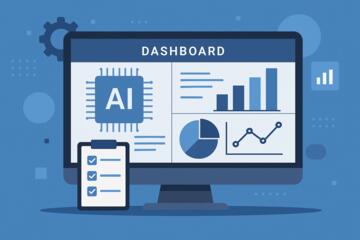
Leaders receive visual dashboards showing which teams face the largest workload increase.
Outcome:
Organizations reduce transition errors and productivity dips by 15–25%.
6. Track Adoption in Real Time With AI Analytics
What to do:
Monitor user behavior across applications to measure adoption levels.
Tools:
-
Pendo AI Analytics
-
WalkMe Insights
-
Microsoft Power BI + AI dashboards
Example:
AI identifies that 40% of employees still export data manually instead of using automated workflows—targeted training follows.
Impact:
Improves compliance with new processes and accelerates ROI on new systems.
7. Automate Change Management Workflows
What to do:
Use AI to route tasks, approvals, and updates automatically to the right stakeholders.
Tools:
-
ServiceNow ITSM + AI workflows
-
Monday.com WorkOS with AI automation
-
Asana AI Routing
Why it works:
Automation removes administrative bottlenecks and keeps transformation on schedule.
Mini-Case Examples
Case 1: Healthcare Network Improves EMR Adoption
Organization: Unity Regional Health
Problem: Low adoption of a new EMR system; clinicians struggled with workflows.
Solution: Implemented WalkMe + Viva Insights.
Results:
-
EMR adoption increased from 63% to 92% within 90 days
-
Training time per clinician reduced 52%
-
AI analytics identified three workflow bottlenecks that were corrected immediately
Case 2: Financial Services Firm Reduces Transformation Risk
Company: EagleStone Financial Group
Problem: Staff resistance to new compliance software.
Solution: Deployed Qualtrics NLP for sentiment insights + targeted leadership communication.
Results:
-
Negative sentiment dropped 38% in 6 weeks
-
Adoption reached 88% by the second month
-
Compliance violations related to legacy processes reduced 40%
Comparison Table: AI Tools for Change Management
| Tool | Best For | Key Strengths | Limitations |
|---|---|---|---|
| Microsoft Viva Insights | Readiness + behavior analytics | Strong Microsoft 365 integration | Requires O365 ecosystem |
| Qualtrics XM | Sentiment & predictive analytics | Industry-leading NLP | Higher cost |
| WalkMe | Software adoption | In-app training & analytics | Setup can be time-consuming |
| Whatfix | Enterprise training | Easy to deploy, adaptive learning | Less advanced behavioral AI |
| CultureAmp | Employee readiness | Real-time engagement insights | Not a full adoption tool |
| ServiceNow AI | Workflow automation | Strong impact mapping | Enterprise-focused |
Common Mistakes and How to Avoid Them
1. Relying Only on Training Instead of Behavioral Insights
Many organizations push training without understanding readiness.
Fix:
Use AI sentiment and behavior analytics before launching training sessions.
2. Ignoring Resistance Until It Becomes Visible
By the time resistance surfaces openly, it is already entrenched.
Fix:
Monitor feedback, productivity changes, and usage patterns continuously.
3. Sending the Same Message to Everyone
A generic message increases confusion and reduces trust.
Fix:
Segment and personalize communication using AI.
4. Overloading Employees With Information
Transformation fatigue reduces adoption.
Fix:
Deliver micro-learning triggered by behavior, not mass training events.
5. Not Measuring Adoption After Rollout
Organizations often assume that implementation = adoption.
Fix:
Use AI dashboards to continuously track user behavior and adjust strategy.
Author’s Insight
As someone who has supported several digital transformation programs, I’ve seen AI become an invaluable tool for managing change effectively. The biggest advantage lies in visibility—AI surfaces patterns leaders would never catch manually. My advice: start with small pilots using sentiment analysis and digital adoption tools, then scale once you have behavioral insights. The key is to treat AI as a decision-support engine, not a replacement for empathetic management.
Conclusion
AI helps organizations prepare teams for transformation by predicting readiness, personalizing communication, improving training, and tracking adoption in real time. Through analytics, automation, and adaptive learning, AI reduces resistance, accelerates implementation, and ensures teams embrace new ways of working. As transformation becomes constant across industries, AI-enabled change management is no longer optional—it’s a strategic advantage.