The Evolution of Terminal Visibility
Machine vision in port environments is no longer a futuristic concept; it is the backbone of the "Dark Terminal" philosophy. At its core, this technology uses industrial-grade sensors and deep learning algorithms to perceive, identify, and track assets in real-time. Unlike traditional RFID tags, which require physical attachment to every chassis and box, machine vision leverages the existing visual markers of the maritime world—ISO codes, hazard labels, and license plates.
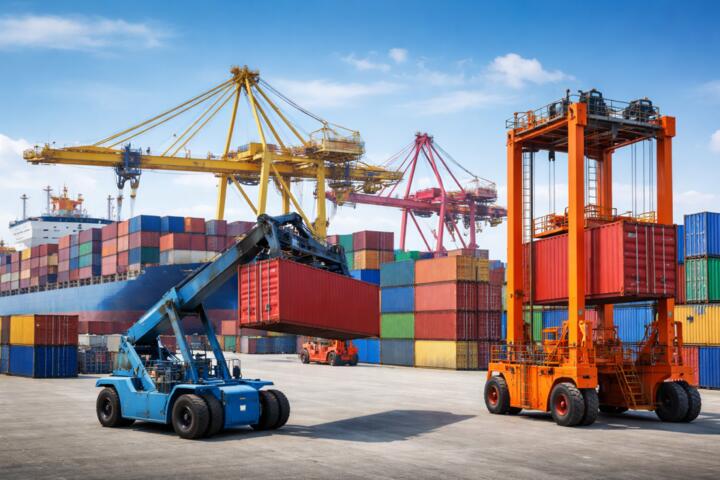
In a practical sense, imagine a quay crane equipped with 4K cameras. As a spreader picks up a container, the system automatically verifies the ID, checks for structural damage, and confirms the seal integrity without the crane operator slowing down. This "flow-through" processing is what separates legacy ports from next-gen leaders.
Market data suggests the urgency of this transition. According to industry reports from 2024 and 2025, ports utilizing AI-driven optical character recognition (OCR) have seen a 25% reduction in "truck turnaround time" (TTT). In major hubs like the Port of Rotterdam or Singapore’s Tuas Port, these seconds saved per container scale into millions of dollars in recovered operational capacity annually.
Critical Vulnerabilities in Traditional Gate and Yard Management
The most significant pain point in modern port operations is the "Data Gap" created by manual entry. When a clerk manually types a container ID or a gate guard checks a seal, the margin for error is roughly 2% to 5%. In a terminal handling 2 million TEUs (Twenty-foot Equivalent Units), that equates to 100,000 potential data mismatches, leading to lost containers and insurance disputes.
Many terminals fail by relying on "fragmented automation." They might have an automated gate but still use manual inspections for damage claims. This creates a "bottleneck shift" where the gate moves quickly, but the yard becomes a parking lot because the subsequent data processing can't keep up.
Real-world consequences are severe. A single misidentified "Reefer" (refrigerated container) that isn't plugged into power because of a logging error can result in $200,000 worth of spoiled cargo. Furthermore, manual inspections in high-traffic zones pose significant safety risks, as workers are forced to walk between heavy machinery to verify IDs, a practice that leading safety standards now aim to eliminate entirely.
Implementing Intelligent Recognition: Methods and Tools
Autonomous Gate Systems (AGS)
The first point of contact is the gate. Implementing a multi-lane AGS involves high-speed OCR engines that capture data at speeds up to 60 km/h. Use industrial cameras like those from Basler or Hikvision Robotics, paired with specialized OCR software like Cerebrum or Kaleris.
-
The Result: Gates can transition from 5 minutes per truck to under 30 seconds.
-
Key Metric: 98%+ first-pass read rate even in heavy rain or fog.
Automated Damage Inspection
Instead of manual walkarounds, utilize "Camera Portals" equipped with line-scan sensors. These systems create a 360-degree high-resolution digital twin of the container upon entry. Companies like Camco Technologies provide systems that automatically flag dents, bulges, or door gaps.
-
The Result: Immediate evidence for insurance claims, reducing "false claims" by up to 40%.
-
Key Metric: Detection of structural defects as small as 5mm at moving speeds.
STS Crane Optical Verification
Ship-to-Shore (STS) cranes are the most expensive assets in a port. Equipping them with vision systems ensures that the "Load/Discharge" list in the Terminal Operating System (TOS) matches reality. Integration with platforms like Navis N4 or CyberLogitec allows the system to cross-reference visual data with the manifest in milliseconds.
-
The Result: Elimination of "Twin-Lift" errors where two containers are accidentally picked up but only one is recorded.
Global Implementation Benchmarks
Case Study 1: Mediterranean Gateway Terminal
A mid-sized terminal in the Mediterranean faced a 15% increase in vessel delays due to slow crane productivity. They implemented an AI vision layer on eight STS cranes to automate container ID and seal detection.
-
Solution: Integrated ABB’s Ability crane OCR.
-
Outcome: They achieved a 30% increase in "Moves Per Hour" (MPH) and eliminated the need for "Tally Clerks" on the dangerous quay floor.
Case Study 2: North American Inland Port
An intermodal hub struggled with truck congestion that backed up onto local highways.
-
Solution: Installed an automated gate system using Visy OCR and license plate recognition (LPR).
-
Outcome: Reduced average truck idling time by 12 minutes. Over 500 trucks per day, this saved approximately 100 hours of engine emissions daily, significantly improving their ESG (Environmental, Social, and Governance) rating.
Strategic Checklist for Vision Integration
| Feature | Standard Manual Process | Machine Vision Enhanced |
| Data Entry | Manual typing (Slow, Error-prone) | OCR/Deep Learning (Instant, Accurate) |
| Damage Claims | Paper-based, subjective | High-res digital imagery (Objective) |
| Safety | Personnel in high-traffic zones | Remote monitoring (Zero-hazard) |
| Seal Verification | Manual physical check | Visual AI seal-presence detection |
| Cost Per Move | High (Labor + Idle time) | Low (Optimized asset utilization) |
Implementation Roadmap
-
Audit Connectivity: Ensure your yard has a 5G or high-capacity Fiber backhaul to handle 4K video streams.
-
Edge vs. Cloud: Deploy "Edge Computing" for OCR to ensure low latency; don't wait for the cloud to open a gate.
-
TOS Integration: Ensure your vision provider has an open API for your specific Terminal Operating System.
-
Lighting Calibration: Install high-CRI LED arrays to ensure 24/7 readability regardless of shadows or glare.
Navigating Common Pitfalls
A frequent mistake is ignoring "Environmental Noise." A system that works in the California sun might fail in a Hamburg blizzard. Always demand "All-Weather" certified enclosures and thermal management for cameras.
Another error is "Data Siloing." If the machine vision system captures a container ID but doesn't immediately push that to the TOS, the data is useless. Ensure "Hardware Agnostic" software is used so you aren't locked into a single camera brand for the next decade.
Finally, don't overlook "Ghost Reads." Occasionally, a system might read a logo as a container ID. Modern neural networks prevent this through "Contextual Filtering," where the AI knows a container ID must follow specific ISO 6346 formats (four letters, seven numbers).
Expert FAQ
Can machine vision handle dirty or rusted containers?
Yes. Modern deep learning models are trained on millions of "degraded" images. They use probabilistic logic to "infer" obscured characters with higher accuracy than a human eye in low-light conditions.
What is the typical ROI period for a gate automation project?
For a terminal handling over 200,000 TEUs, the Return on Investment (ROI) is typically achieved within 14 to 18 months, primarily through labor reallocation and reduced truck idling costs.
Does this replace human workers?
It shifts roles. Instead of "Tally Clerks" standing in rain, you have "Exception Handlers" in a control room who only intervene when the AI flags a high-uncertainty read (usually less than 1% of cases).
How does 5G impact these systems?
5G allows for "Mobile Vision." You can mount cameras on reach stackers or drones to perform yard inventory audits in real-time without needing fixed cabling everywhere.
Is it compatible with hazardous goods (Hazmat) labels?
Absolutely. Advanced AI can recognize IMO classes and placards, automatically alerting the system if a flammable container is being placed too close to a heat source in the yard.
Author’s Insight
In my years of observing terminal transformations, the biggest hurdle isn't the software—it's the "Infrastructure Readiness." I often see ports buy top-tier AI software only to run it on 10-year-old network switches, leading to lag that defeats the purpose of automation. My advice: prioritize your "Digital Foundation" (cabling and compute) before the "Digital Eyes." A robust vision system is the only way to scale without physically expanding your port's footprint.
Conclusion
The shift toward vision-centric port automation is the only viable path for terminals facing increased vessel sizes and tighter margins. By automating the identification and inspection process, operators eliminate the primary source of logistical friction: human error at the point of entry. To start, focus on a "Gate-First" strategy to stabilize data accuracy, then expand vision capabilities to cranes and yard equipment. The goal is a seamless, data-rich environment where every movement is recorded, verified, and optimized without a single pause in the workflow.