Introduction: Why AI Tools Are Critical for Automating Customer Support Workflows
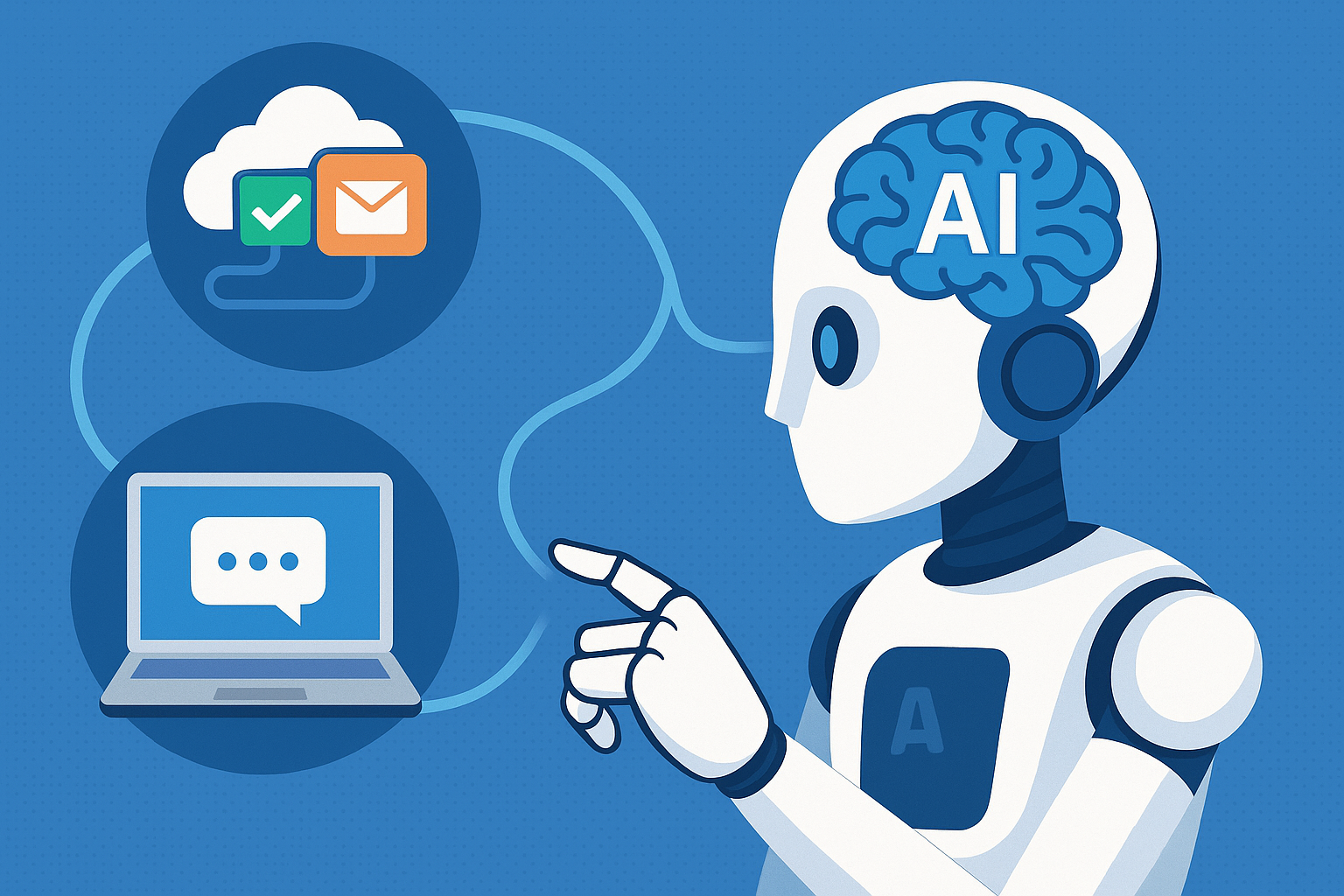
AI tools for automating customer support workflows help businesses handle rising customer expectations while reducing agent workload. As digital communication expands, support teams face a higher volume of messages across chat, email, social media, and phone. Manual support processes no longer scale. AI-driven automation improves speed, accuracy, and personalization, freeing human agents to focus on complex issues.
Companies like Shopify, Hilton, and Rakuten rely on AI-powered automation to deliver consistent, 24/7 customer service across global markets.
How AI Is Transforming Customer Support Workflows
1. Instant Response Automation
AI chatbots and virtual assistants handle:
-
FAQs
-
Order updates
-
Returns and refunds
-
Appointment scheduling
-
Account troubleshooting
Tools like Intercom Fin AI and Zendesk Answer Bot resolve up to 40% of inquiries without human intervention.
2. Smart Ticket Routing
AI automatically:
-
Classifies tickets
-
Prioritizes urgent issues
-
Routes requests to the right department
-
Detects customer sentiment
-
Identifies VIP customers
This reduces wait times and prevents tickets from landing in the wrong queue.
3. AI-Powered Knowledge Base Search
AI improves knowledge retrieval by:
-
Suggesting relevant help articles
-
Auto-generating answers
-
Updating documentation
-
Detecting outdated content
Platforms like Confluence with Atlassian Intelligence use natural language processing (NLP) to deliver more accurate results.
4. Sentiment Analysis and Quality Control
AI evaluates communication tone to detect:
-
Customer frustration
-
Negative sentiment spikes
-
Opportunities for upselling
-
Risk of churn
Tools like HubSpot Service Hub AI help managers monitor team performance in real time.
5. Automated Email Handling
AI drafts, categorizes, and responds to emails using large language models (LLMs).
It can pull customer history, product information, and policies to craft personalized responses.
6. AI for Voice Support
AI models power phone systems that:
-
Transcribe calls
-
Suggest answers in real time
-
Detect emotional cues
-
Trigger workflows based on customer intent
Companies using AI call assistants report 20–35% faster resolutions.
Best AI Tools for Automating Customer Support Workflows
Below are the top AI-powered tools trusted by leading brands.
1. Intercom (Fin AI)
Best for: Real-time chat automation
Key Features
-
Advanced AI chatbot
-
Autoresolution workflows
-
AI-assisted agent replies
-
Customer sentiment analysis
Why It’s Effective
Fin AI can answer complex product questions by referencing your documentation. It integrates seamlessly with CRMs, making it ideal for SaaS and eCommerce.
2. Zendesk AI (Answer Bot + Intelligent Routing)
Best for: Large companies with high ticket volume
Key Features
-
Multilingual AI chat
-
Ticket triage
-
Macro suggestions
-
Automated form filling
Why It’s Effective
Zendesk’s AI reduces manual ticket handling by identifying customer intent faster than human triage.
3. Freshdesk AI (Freddy AI)
Best for: Omnichannel support teams
Key Features
-
Email summarization
-
Suggested next actions
-
Support metrics forecasting
-
Automated ticket creation
Why It’s Effective
Great for teams managing email, chat, social, and phone through one platform.
4. HubSpot Service Hub AI
Best for: CRM-driven support
Key Features
-
AI conversation analysis
-
Automated customer lookup
-
Knowledge base optimization
-
Chatflows for lead qualification
Why It’s Effective
Combines customer service, marketing, and sales data for personalized support.
5. Ada AI Chat Automation
Best for: Enterprises needing customizable automation
Key Features
-
Complex workflow builder
-
API integrations
-
AI intent recognition
Why It’s Effective
Used by Shopify and Meta, Ada offers enterprise-grade automation with high flexibility.
6. Tidio AI (Lyro)
Best for: Small businesses and eCommerce
Key Features
-
AI customer conversations
-
Product recommendation engine
-
Abandoned cart recovery
Why It’s Effective
Affordable and easy to deploy—ideal for growing eCommerce stores.
7. Salesforce Einstein Service Cloud
Best for: Deep enterprise automation
Key Features
-
Predictive case routing
-
Real-time recommendations
-
AI insights in customer records
Why It’s Effective
Perfect for enterprises already built on Salesforce.
Benefits of AI Automation in Customer Support
1. Faster Response Time
AI delivers instant answers, improving customer satisfaction (CSAT) scores dramatically.
2. Lower Operational Costs
AI reduces workload and staffing pressure, decreasing support expenses by up to 35%.
3. 24/7 Availability
AI never sleeps—allowing global support anytime.
4. Improved Accuracy
AI provides consistent answers and reduces human error.
5. Better Agent Productivity
AI assists agents by:
-
Drafting replies
-
Suggesting solutions
-
Summarizing conversation history
-
Handling repetitive tasks
6. Higher Customer Satisfaction
Customers get faster, more personalized support.
How to Implement AI Tools for Customer Support Automation
Step 1: Map Your Support Workflows
Identify:
-
High-volume requests
-
Repetitive questions
-
Processes that cause delays
-
Points where customers churn
Step 2: Choose Tools Aligned With Your Needs
Consider:
-
Channel coverage (chat, email, voice)
-
Language support
-
Integration with your CRM
-
AI explainability
-
Cost
Step 3: Integrate AI With Your Knowledge Base
AI requires:
-
Updated FAQs
-
Organized documentation
-
Clear workflows
Step 4: Start With Simple Automations
Examples:
-
Order status queries
-
Password resets
-
Billing information
-
Appointment scheduling
Step 5: Train AI Models With Real Conversations
Feed the AI:
-
Support transcripts
-
Email history
-
Common customer scenarios
Step 6: Continuously Monitor Performance
Track:
-
Resolution rate
-
Escalation rate
-
CSAT changes
-
Misclassification trends
Common Mistakes Companies Make When Using AI for Customer Support
Mistake 1: Automating Everything at Once
Start with limited workflows before scaling.
Mistake 2: Failing to Train the AI Properly
Bad training data leads to inaccurate responses.
Mistake 3: Not Giving Customers an Escape Path
Always allow escalation to a human agent.
Mistake 4: Forgetting About Tone and Personalization
AI should sound helpful—not robotic.
Mistake 5: Ignoring Analytics
AI insights reveal customer pain points and workflow gaps.
Author’s Insight
I once worked with an eCommerce brand struggling with high ticket volume during holiday seasons. Their support team was overwhelmed, resulting in long response times and negative reviews. After implementing an AI chatbot integrated with their Shopify store, 65% of inquiries were resolved instantly.
The biggest surprise? Customers preferred the AI assistant for simple tasks because it was faster and clearer than human agents.
AI didn’t replace the support team—it empowered them to focus on meaningful conversations.
Conclusion
AI tools for automating customer support workflows help businesses speed up service, reduce costs, and improve customer satisfaction. By combining AI chatbots, smart routing, sentiment analysis, and knowledge management, organizations create a scalable, efficient support ecosystem.
With customer expectations rising, AI automation is no longer optional—it’s the foundation of modern customer service excellence.